AI Mentions
Ahrefs Free AI Visibility Checker: What You Get, Limitations & Alternatives
Yes, Ahrefs has a free AI Visibility Checker. You can enter a brand name, inspect its presence across six AI search experiences, and see…
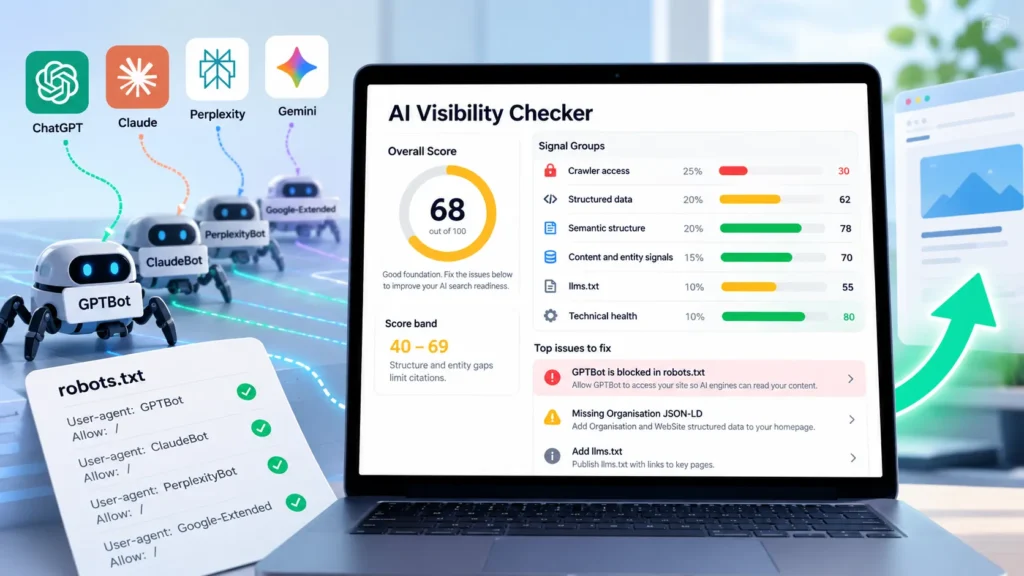
Buyers now ask AI engines like ChatGPT, Claude and Perplexity which products to consider. An AI visibility checker tests whether those engines can read your site and understand your brand. Check crawler access first, then the six signal groups. Blocked crawlers and missing structured data prevent engines from reading your site, so please address those issues first.
A page engine cannot fetch and cannot be cited. Blocking search-facing bots removes you from AI search, while blocking training bots does not. Check current policies: OpenAI’s crawler documentation, Anthropic’s crawler documentation and Google’s crawler documentation for Google-Extended.
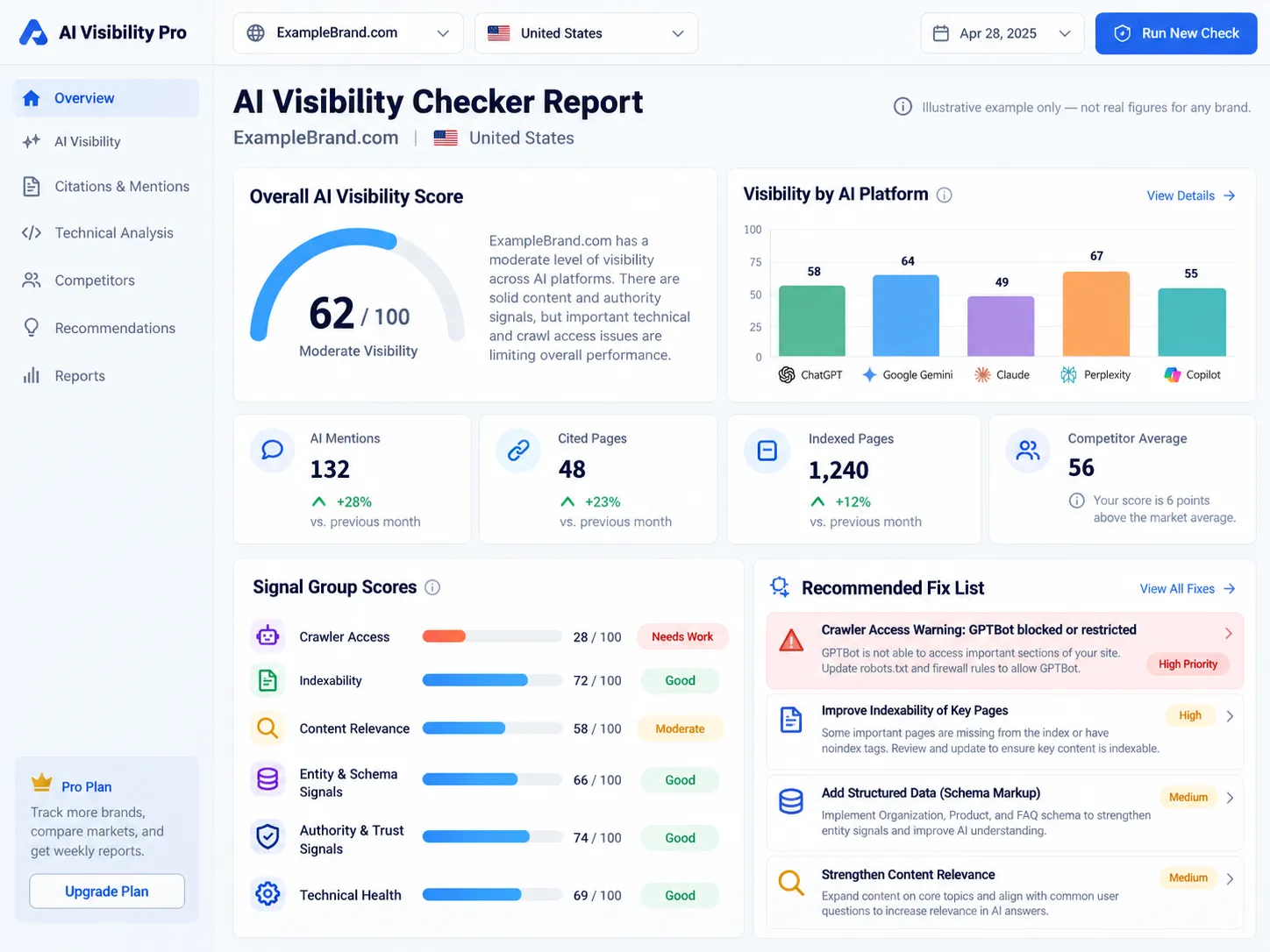
Buyers increasingly ask AI answer engines like ChatGPT, Claude, Gemini and Perplexity for shortlists. An AI visibility checker tests whether a model can read your website. A free AI visibility checker crawls your homepage and combines six signal groups into a weighted score from 0 to 100, as Arobis describes its own checker. The report estimates readiness, not recommendations, and shows how your search engine visibility compares with that of your competitors.
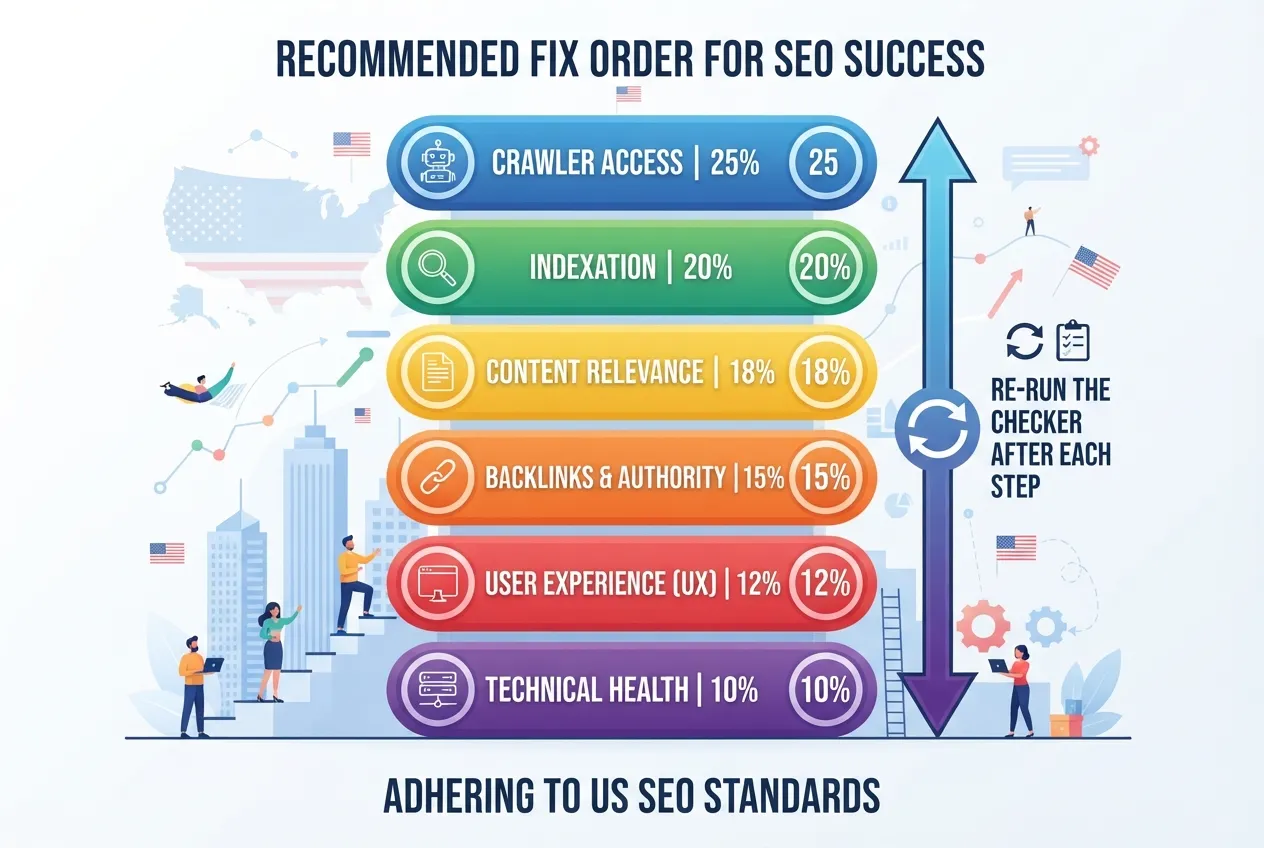
The groups are AI crawler access (25%), structured data (20%), semantic structure (20%), content and entity signals (15%), llms.txt (10%) and technical health (10%):
Please prioritise fixing crawler access and structured data, as they carry 45% of the weight. The visibility report lists these results across all platforms you track.
Enter your homepage URL and wait 30 to 60 seconds for the crawl. Read the overall score, then its band. These bands are a reader’s guide, not an industry standard:
Check the crawler access result first, then run these checks in order:
Disallow: / rule that catches GPTBot, ClaudeBot, PerplexityBot or Google-Extended.The score is a readiness estimate and a list of fixes, not a verdict on your visibility.
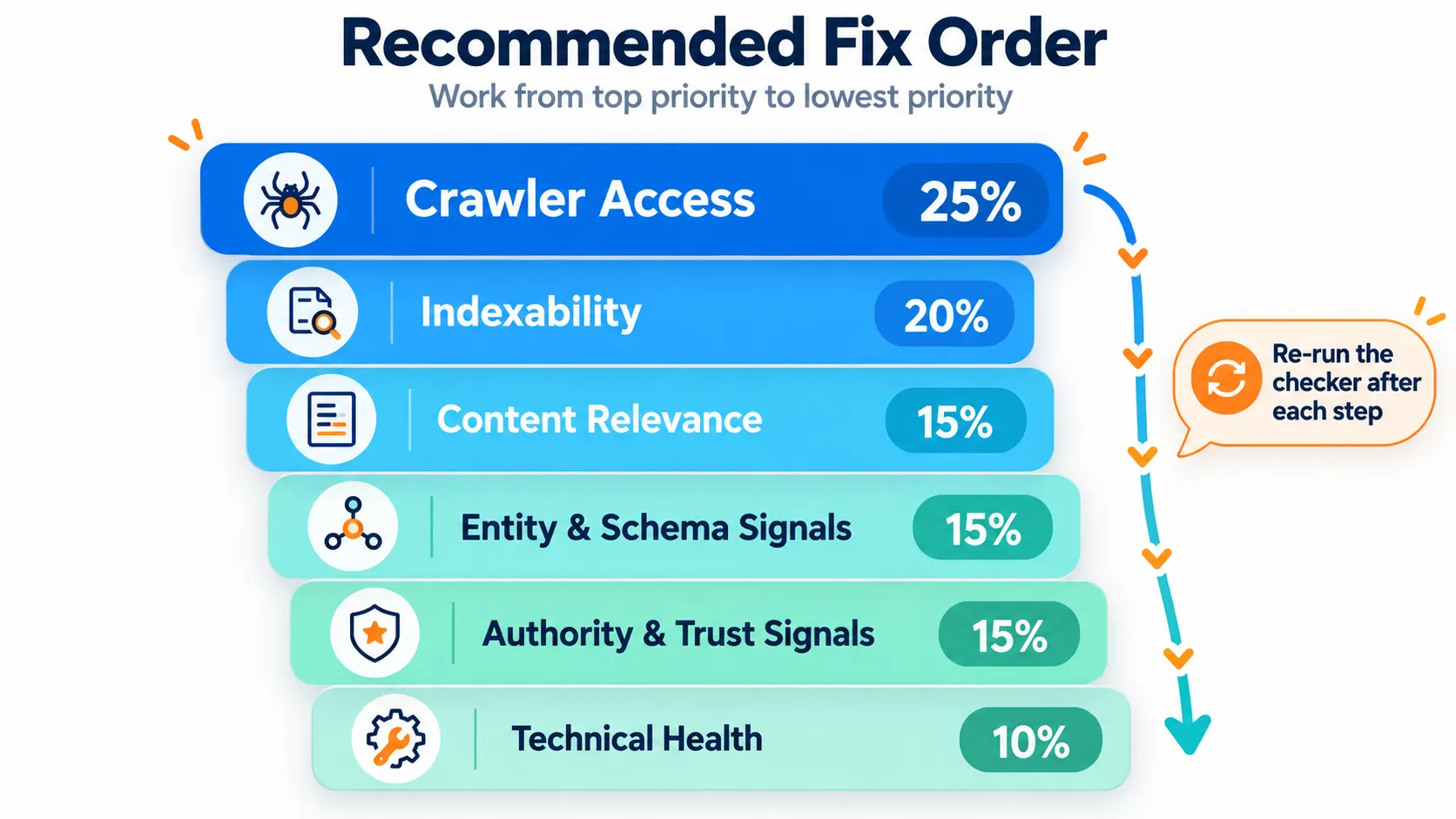
Work through the six signal groups in weight order, starting with crawler access (25%). If GPTBot, ClaudeBot, PerplexityBot or Google-Extended are blocked, no structured data or copy edits will get your pages read. Unblock them, then rerun the ai visibility checker. The llms.txt proposal describes the machine-readable summary covered below.
Check each bot separately. A blocked training bot and a blocked search bot have different effects on your visibility score, so decide which to open before editing robots.txt.
Add Organisation and website JSON-LD, and give each page a clear title, a meta description, and a logical heading hierarchy. Publish llms.txt (10%) once its linked pages are reachable, so AI tools and search results can find your product and policy pages.
The weighted score can send a team to the wrong fix. If PerplexityBot is blocked, unblocking it lifts crawler access far faster than improving content. Blocks that are hard to overcome blocks outrank weighted gains because a blocked crawler reads zero pages, and a blocked page cannot answer any query. First, clear the hard block, then re-run the check, and finally recheck only the group you changed.
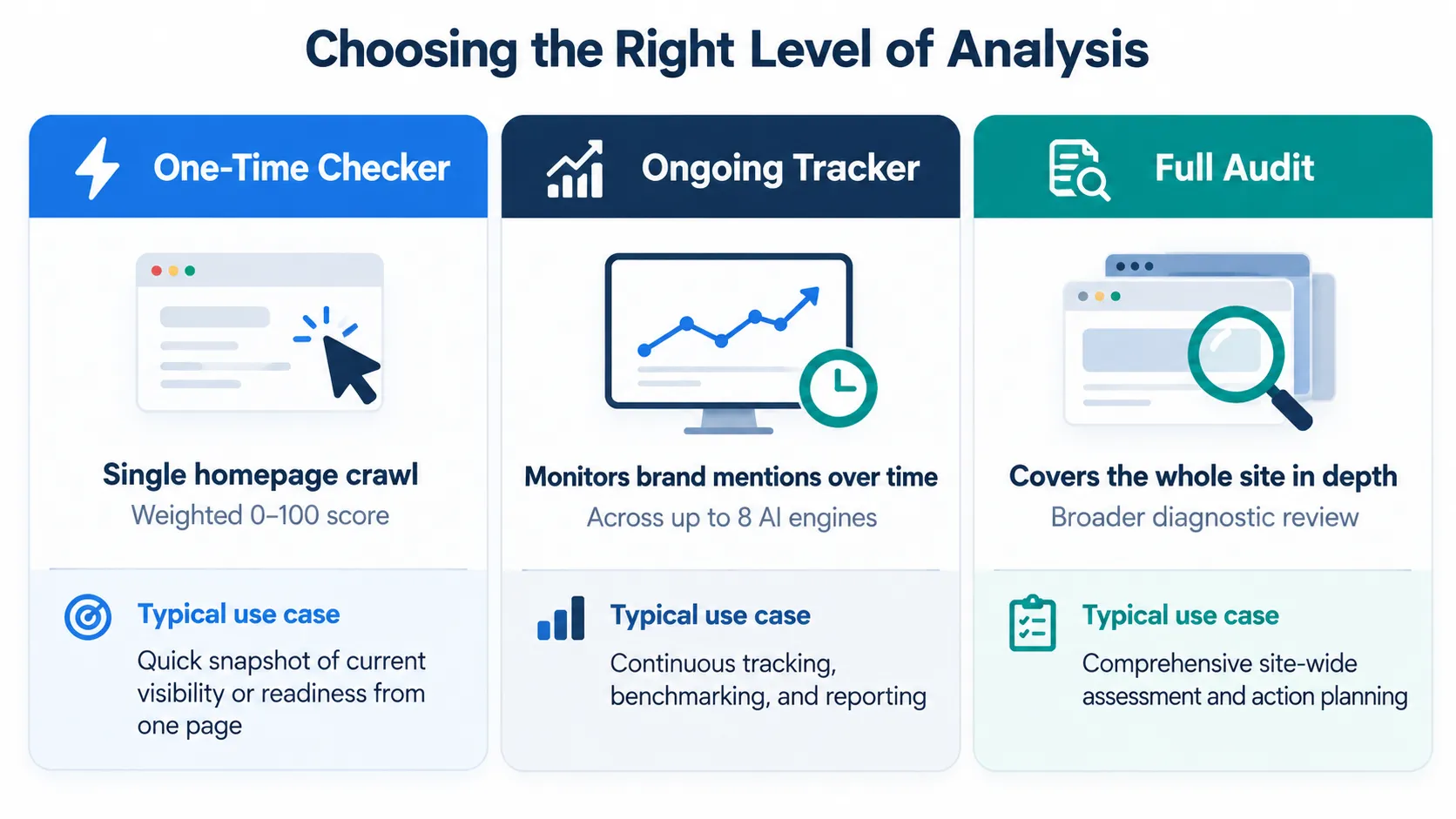
A one-time AI visibility checker from Digimetrics.ai gives a weighted readiness score of 0 to 100 based on a homepage crawl. An ongoing tracker, such as the Honeyb tool, monitors brand mentions across up to 8 engines. A full audit goes deeper into your entire site. Start with the checker, then add tracking only when you need to know which prompts name you. Check each tool’s terms of service and what any free tier covers.
Confirm the tool reads GPTBot, ClaudeBot, PerplexityBot and Google-Extended, since crawler access carries the largest weight in the visibility score. Choose on three criteria: whether it reports the six signal groups separately, whether it shows the fix order, and whether you can re-run the check after each change. A tool that reports a missing signal group without explaining the policy behind it gives you little to act on. A good AI visibility report should make that policy clear for each engine.
No. An SEO audit examines how search engines index and rank your site. An AI visibility checker reads whether AI engines, including Gemini, can access and understand your site. Crawler access alone accounts for 25% of the score, a factor that standard SEO audits may not prioritise.
No. The visibility score estimates whether engines can read and cite your pages. Recommendations depend on what models such as Claude already know about your category, so measuring mentions requires prompt-level tracking to see which answers name you.
Treat the score as a queue, not a grade. Work the fix-order scorecard by weight, starting with AI crawler access, which is 25% of the score. Unblock the search-facing bots, re-run the check, then move to structured data. Stop when rechecks stop moving. A point or two after small changes is usually noise.

Tom is the CEO of MediaOne, a leading digital marketing agency. He is a business-experienced SEO consultant as well as a Google Gold Search Expert serving the international community. He has consulted for MNCs like Canon, Maybank, Capitaland, SingTel, ST Engineering, WWF, Cambridge University, as well as Government organisations like Enterprise Singapore, Ministry of Law, National Galleries, NTUC, e2i, SingHealth. His articles are published and referenced in CNA, Straits Times, MoneyFM, Financial Times, Yahoo! Finance, Hubspot, Zendesk, CIO Advisor. Under his stewardship, MediaOne has won dozens of prestigious digital marketing awards.
Run a free Digimetrics audit across SEO, AI search, content and technical health, and get a plan you can act on today.
Start free →Yes, Ahrefs has a free AI Visibility Checker. You can enter a brand name, inspect its presence across six AI search experiences, and see…
Your website ranks on Google. Your SEO dashboard shows healthy organic traffic, and your brand appears for several commercially valuable keywords. But when someone…
Direct answer: To rank in Perplexity and ChatGPT, answer one narrow question clearly, make each claim easy to check, and structure the page so…