Content
Common Upscaled Image Artefacts and How to Fix Them
Upscaling invents pixels that were never captured, so flaws like blur, halos, blocky edges and waxy texture are predictable. Each traces to a specific…
Upscaling invents pixels that were never captured, so flaws like blur, halos, blocky edges and waxy texture are predictable. Each traces to a specific…
Key Takeaways Detector scores estimate how an image looks to a model, not how it was made. Detectors err both ways: real photos may…
The most important rule: set your false-positive limit before you look at any accuracy figure. Pick the detector that stays under that limit on…
Most “best AI image detector” lists rank tools by their headline accuracy numbers. I tested several of them on the same set of images,…
Should you label AI-generated images? Yes, for most images that could mislead readers. A realistic image of a person or event that was generated…
Newsrooms and brand teams often need to know whether an image is real. Vendor accuracy claims describe their own test sets. This article explains…
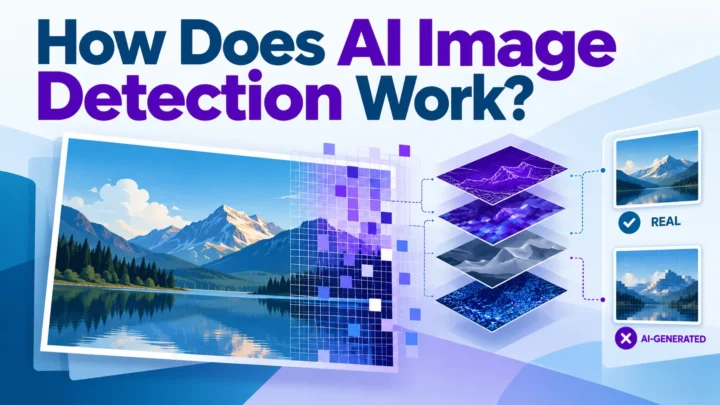
Short answer: An AI image detector is a classifier trained on labeled real and AI-generated images. It outputs a probability, such as “87% AI-generated,”…
Catalog teams often handle images they cannot fully verify, and checking files one by one does not scale. This guide explains how bulk AI…
Paid AI image detector plans range from roughly $5 to $100 per month, with enterprise contracts higher. Compare tools by cost per verified image:…
A free AI image detector gives a quick probability score for whether a picture was AI-generated. A 2026 roundup of free options lists many…