AI Mentions
Ahrefs Free AI Visibility Checker: What You Get, Limitations & Alternatives
Yes, Ahrefs has a free AI Visibility Checker. You can enter a brand name, inspect its presence across six AI search experiences, and see…
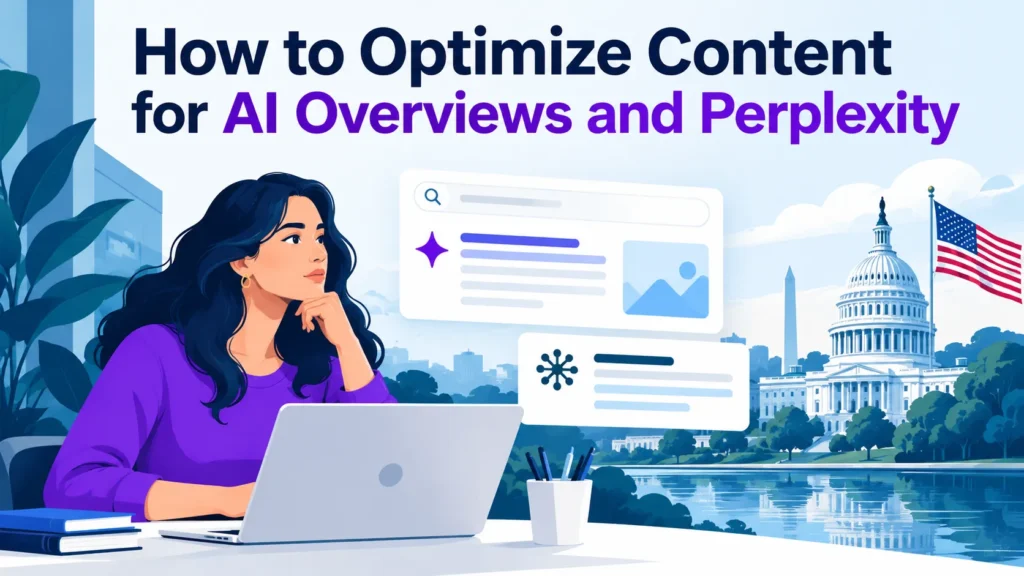
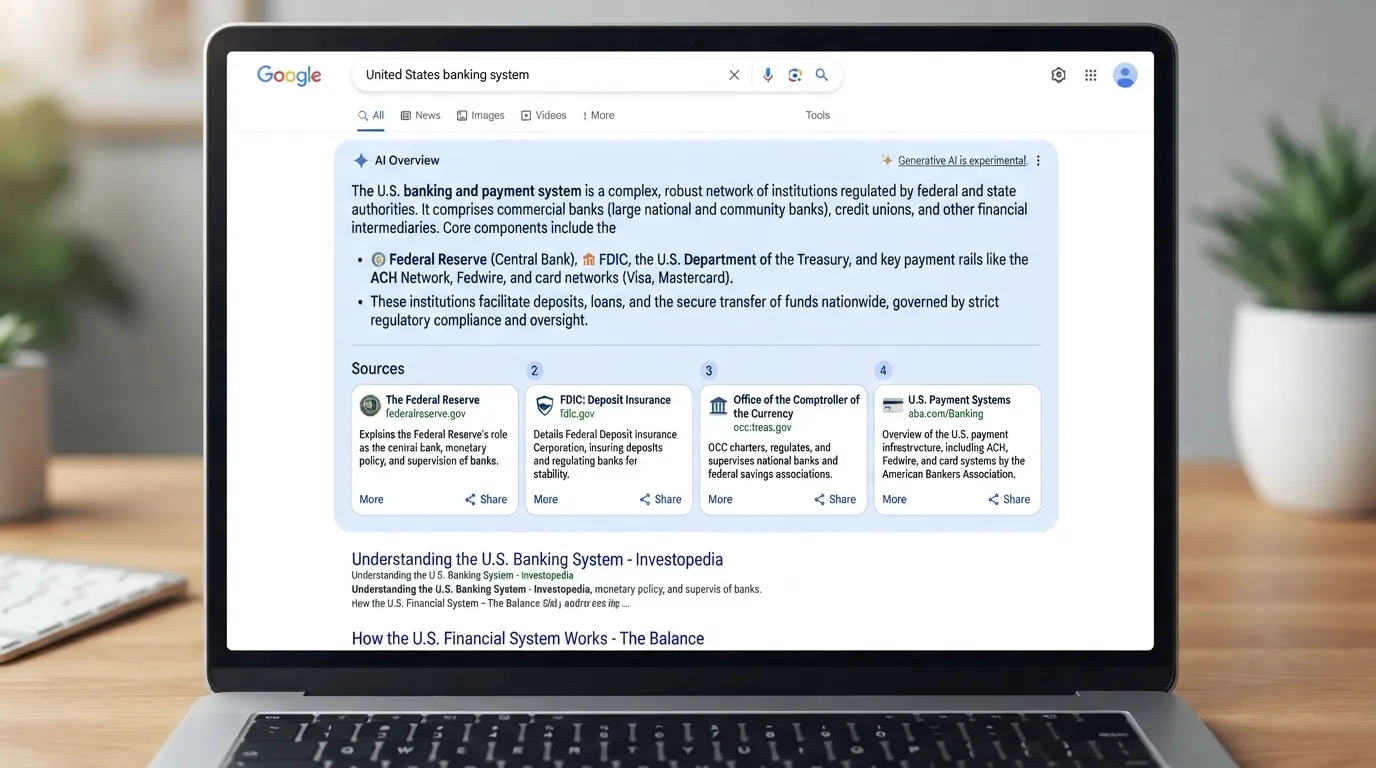
AI answer engines now sit between searchers and publishers. Google’s AI Overviews appear in 13.14% of searches, according to Semrush data from March 2025, and reach more than 2.5 billion people a month, according to Wellows.
Start with one question: why would a model lift your sentence, attribute it and move on? Answer engines reward pages with a self-contained, attributable answer, not pages that repeat a keyword. How to optimize content for AI Overviews therefore starts with citation-worthiness, which matters more than ranking first. Clear information architecture and engine optimization support this, as does a featured snippet-style answer near the top of each page.
Work through these steps in order. Each one ends with a check you can run on a real page.
Overviews draw on about 8.0 sources on average (CRKLR). Cluster coverage, with several related pages each answering one question well, beats a single perfect article for search visibility and user help. Google’s systems now judge content quality far better than older algorithms did (Women in Tech SEO), so thin pages are unlikely to be lifted into a traditional results page or an overview.
Ranking and inclusion overlap but do not match. ResultFirst found that 50% of top-ranking pages appear in AI Overviews, and a featured snippet raised the chance of inclusion to 60% (ResultFirst). Position alone is not the deciding factor, and a clear keyword match helps less than a direct answer. Pages that spread across social media can earn visibility, but that reach does not by itself make a page more likely to be cited.
Perplexity is built around the citation: every answer shows a visible source list. Whether it favors any particular page type is inferred from observed behavior, not documented. A page in that list has a direct route to a click; one outside it may be effectively invisible for that answer, which matters for marketing and any information you want users to find.
Wellows’ analysis of 20.5 million AI citations found that AI Overviews favored stronger domains than ChatGPT did (Wellows). For a smaller site, the bar is higher on Google’s side, while answer engines may give more room to the clearest answer on a narrow question.
Our own small, single-site comparison found cited pages opened with a direct answer and linked their figures, while uncited pages buried the answer under background text. Treat this as a pattern to test on your own pages.
Answer engines do not draw evenly from the web. According to Bullseye Strategy, Reddit accounts for roughly 40% of Google AI Overview citations, journalistic content for 27% overall (nearly 50% for time-sensitive searches), and YouTube for 19%.
Your owned content will rarely out-volume these sources, so aim to earn citations alongside them. On time-sensitive topics, publish dated, clearly attributed updates a journalist could cite. On evergreen topics, write the definitive, self-contained explanation that a forum answer only gestures at, so your site becomes a reliable source of information that reinforces your visibility in AI-generated answers.
Give every substantial page a named author with a verifiable record in the subject, and state what they did firsthand: the test they ran, the data they pulled, the client result they measured. Original data is the strongest signal you can publish, and users trust a website more when its information comes from people who did the work. Original research is the strongest signal you can publish, and users trust a website more when its information comes from people who did the work.
Link every claim to its primary source. Wellows found that AI Overviews favored stronger domains than ChatGPT did, so authority counts. Add a visible editorial policy, a dated corrections note and a contact route so users can check your information and get help.
State the primary intent in one sentence, then list the follow-up questions it implies. If your page answers them in order, the reader does not return to the search results.
Question-shaped queries are your entry point. Per Wellows, queries starting with a question word triggered an AI summary 60% of the time. Short searches of one or two words triggered one only 8% of the time, against 53% for ten words or more.
Cover the topic fully, but cut any section that would survive being deleted. WP SEO AI recommends Flesch scores around 55 for comprehensive content. For technical topics, accept the lower score and shorten your sentences instead.
Format matters less than whether each passage can stand alone as an answer a model can lift and attribute, which is the core of helpful content for Google and for AI systems alike.
Open every section with the answer to its own heading. Engines extract an opening sentence more readily than a paragraph that builds towards its point.
Phrase H2s and H3s as the questions people actually type. Question-word queries trigger Google’s AI Overviews about 60% of the time, according to Wellows. Test each passage alone. If it refers to “the above” without naming its subject, rewrite it.
Name the entities around your topic: platforms, metrics, organizations and related subtopics. For a local business, include local SEO terms, the area served and the platforms your audience uses, such as Google Business Profile.
Define each key term once, then use that same term throughout. Switching between “AI Overview”, “AIO” and “AI summary” makes an engine unsure whether you mean the same thing.
Build FAQ questions from real search data, such as People Also Ask boxes. Keep each answer to roughly 40 to 60 words so it can be quoted whole.
Place the FAQ once, at the end of the page. Scattered question blocks give engines several near-duplicate passages to choose between.
Technical work does not decide whether an AI Overview cites your page. It removes reasons a model might skip it. Structured data, a fast page and visibly current facts make content easier to read, verify and trust. Traditional search engine optimization remains the baseline, and the content for Google you publish should still match the search intent behind each query.
Mark up each page with the schema type that matches its content. Article markup suits editorial pages, FAQPage suits genuine question-and-answer sections, HowTo suits step-by-step procedures, and Organization identifies the publisher. Google’s structured data documentation explains the required properties for each type.
Google says its AI features use the same foundations as standard Search, so schema is not a confirmed requirement for Google AI Overviews. Google’s guidance on AI features and your website is the authoritative reference. Perplexity’s citation rules are not publicly documented, so treat any claim about its schema preferences as inferred until you test it.
Validate every template with Google’s Rich Results Test and the Schema Markup Validator before release. Markup must describe visible content, since a FAQPage block listing questions the reader cannot see erodes trust.
Measure Core Web Vitals on mobile first. Aim for Largest Contentful Paint under 2.5 seconds, Interaction to Next Paint under 200 milliseconds and Cumulative Layout Shift under 0.1. Slow pages lose readers before any answer is read.
Third-party analysis suggests clicks from AI Overview pages are more engaged, according to CRKLR. Google does not confirm this, so treat it as a signal to test, not a rule.
Time-sensitive topics attract a large share of journalistic citations. Journalistic content reaches nearly 50% of citations for time-sensitive searches, according to Bullseye Strategy. Set a review date for every guide, recheck its statistics, and display the last-reviewed date in the byline. Where a fact carries a year, such as “as of 2026”, keep the date next to the figure.
Clicks fall when an AI Overview appears. Bullseye Strategy’s analysis of 300,000 keywords found organic click-through rates drop 34.5% when an AI Overview is present. Pew Research Center’s testing points the same way: people clicked a regular result on 8% of visits where an AI summary appeared, against 15% where none did, as reported by Wellows.
A page can be cited inside an overview and still earn fewer visits. Judge success on citation presence and remaining visits, not rank alone.
Before you track citations, confirm which queries show an overview. Search each target query in a private browser window, set to your target country, and note whether an AI Overview appears. Repeat the check on a different day, because results shift.
Query wording matters. Pew found only 8% of one or two-word searches produced an AI summary, against 53% of searches of 10 words or more, as reported by Wellows. Queries that begin with a question word triggered one 60% of the time, according to the same source. Use this pattern to prioritise your query list.
Build a tracking log before you change anything. Pick 20 priority queries, split between informational questions and commercial terms. Run each in Google Search and Perplexity weekly, using a private browser window, and record:
| Column | What to record |
|---|---|
| Query | The exact phrasing you searched |
| Date | When you ran the check |
| AI Overview shown | Yes or no |
| Your URL cited | Yes or no, and position in the source list |
| Competing sources | Domains named or linked |
| Organic position | Your rank for the query |
| Notes | Any change to the page since the last check |
Manual checks work for a small set. Use a dedicated AI visibility tool once the set grows beyond 20 queries. Rewrite a page when it is missing from the AI Overview or Perplexity answer on three consecutive checks for a query where competitors appear.
Pair citation tracking with business metrics. Track clicks, engaged sessions, conversions and assisted conversions from organic landing pages, and compare cited pages against uncited ones. A cited page that converts well is worth more than a high-traffic page that is cited but drives no action.
Optimizing for AI Overviews means changing what success looks like. The old goal was a click; now the test is whether your content gets cited as a trusted source inside the answer. Semrush data from March 2025 put AI Overviews on 13.14% of searches.
Start with this 30-day plan:
Answer engines will keep changing how they select sources, so do not chase a single format. Write pages that a careful reader and a model can both trust, and keep checking the results, including how your [social media](#) and [local SEO](#) efforts feed into them.
Answer the query directly in the first paragraph, then support each claim with a named source. Match subheadings to the questions people ask, and make sure the page is indexed and crawlable. Wellows reports that AI Overviews favored stronger domains than ChatGPT did, so authority matters as much as formatting.
No. ResultFirst found that 50% of top-ranking pages appeared in AI Overviews, so half did not. Some lower-ranking pages were included too, so answer quality and structure can outweigh position.
Perplexity’s citation mix has not been publicly documented in the sources reviewed here, so any pattern is inferred. For Google AI Overviews, Bullseye Strategy reports Reddit at roughly 40% of citations, journalistic content at 27% and YouTube at 19%. Check Perplexity’s citations for your own queries rather than assuming the Google pattern holds.
Schema is not a confirmed requirement. Google says its AI features use the same foundations as standard Search, per its guidance on AI features. Clear headings, direct answers and visible sourcing do most of the work, and Article and FAQPage markup still helps where it matches visible content.
Review time-sensitive pages on a fixed schedule and show the dates on updated facts. Journalistic content earns nearly 50% of citations on time-sensitive searches, per Bullseye Strategy, so freshness matters most on news-driven topics.
It can. Bullseye Strategy found organic click-through rates fell 34.5% when an AI Overview appeared, across 300,000 keywords. Track citations and assisted conversions alongside clicks to see whether visibility is gained even when traffic dips.

Tom is the CEO of MediaOne, a leading digital marketing agency. He is a business-experienced SEO consultant as well as a Google Gold Search Expert serving the international community. He has consulted for MNCs like Canon, Maybank, Capitaland, SingTel, ST Engineering, WWF, Cambridge University, as well as Government organisations like Enterprise Singapore, Ministry of Law, National Galleries, NTUC, e2i, SingHealth. His articles are published and referenced in CNA, Straits Times, MoneyFM, Financial Times, Yahoo! Finance, Hubspot, Zendesk, CIO Advisor. Under his stewardship, MediaOne has won dozens of prestigious digital marketing awards.
Run a free Digimetrics audit across SEO, AI search, content and technical health, and get a plan you can act on today.
Start free →Yes, Ahrefs has a free AI Visibility Checker. You can enter a brand name, inspect its presence across six AI search experiences, and see…
Your website ranks on Google. Your SEO dashboard shows healthy organic traffic, and your brand appears for several commercially valuable keywords. But when someone…
Direct answer: To rank in Perplexity and ChatGPT, answer one narrow question clearly, make each claim easy to check, and structure the page so…