SEO Audit
Competitor SEO Analysis Tool: How to Choose One and Use It to Outrank Rivals
Contents hide 1 Key Takeaways 2 How to Choose a Competitor SEO Analysis Tool 3 Introduction: Why a Competitor SEO Analysis Tool Matters in…

The best SEO keyword research tool for you depends on your job, not on database size alone. A blogger publishing a few articles a quarter needs different features than an agency auditing many clients. Free tiers, such as Keywords Everywhere, cover much of the basic work, but their daily and monthly caps decide how far you can get without paying.
Verify pricing on each vendor’s site before buying, since prices and limits change often.
Vendor limits and prices change over time. For planning your SEO work, see Digimetrics AI.
A keyword is the word or phrase a person types into a search engine. Search engines match that query to pages by reading their terms, topics and signals of usefulness. Keyword data shows what a query is worth before you write, but treat any figure as an estimate. Keyword data shapes what a page is about, including the topic, title tag, headings, opening sentences and internal link anchor text. It also corrects assumptions: a writer may believe readers search for “content marketing strategy”, while the data shows more people type “how to plan content for a small business”. Keyword research can reveal these gaps before a page is written.
Keywords are usually grouped by length:
Every query also carries an intent, the reason behind the search:
Branded keywords include a company or product name. Non-branded keywords describe the need without one and usually reach a wider audience. Question-based keywords begin with who, what, why, how or can, and map well to FAQ sections.
The process starts with a seed term, a short, broad phrase describing your topic. For this article, “SEO keyword research tool” is a seed. Building a longer phrase, such as “free SEO keyword research tool for beginners”, narrows the field, and according to SEOTesting it can surface roughly 10 times more keyword ideas. Run the seed through your tool, then rebuild it as a longer phrase and run it again. Keywords Everywhere and similar browser extensions can show volume beside live results as you work through this step.
Idea sources matter as much as the tool. Autocomplete shows what people actually type, People Also Ask boxes reveal follow-up questions, and related searches show adjacent intent. Question tools such as Answer The Public also surfaces the phrasing people use when they ask about a topic. KeywordTool.io draws on Google Autocomplete and more than a dozen other platforms, including YouTube, Bing, Amazon and Instagram, according to Rankability. Autocomplete and People Also Ask reflect US search behavior, but check whether a tool’s volume data is US-specific before relying on it. For commercial terms, check Google Ads keyword planner data. Tools such as Ahrefs can cross-check these ideas against live ranking data.
A raw list of 300 terms is not a plan. Score each keyword on the same 1 to 5 scale for each factor:
Weight intent highest, because a high-volume term that does not match your offer converts poorly. A term scoring 5 for intent and 3 for difficulty beats a term scoring 5 for volume and 5 for difficulty.
Turn the list into a publishing plan:
Each page should target one primary keyword, with closely related secondary terms grouped beneath it. Do not use the same main term for two pages. Teams that compare the best SEO tools for this step often find that a single platform covers both mapping and tracking.
Cannibalization happens when two of your pages compete for the same query, so search engines cannot tell which to rank. Check your map before publishing. If two planned pages share a primary keyword, merge them or re-scope one toward a different intent. If you cannot name a distinct primary keyword for a page, it does not yet deserve to exist.
High search volume is often the wrong target for a newer website. A term with 20,000 monthly searches and a difficulty score in the 80s is usually held by established domains with years of backlinks. A lower-volume term with difficulty in the 10s to 20s, where top results are thin or outdated, can bring steady visits within months. Keywords Everywhere and Answer The Public can help surface these terms, but neither replaces checking the actual results. Ahrefs and Semrush are also widely used for this kind of research, and a complete SEO workflow often combines several tools. Finding the best free keyword research options is a reasonable starting point, though free tiers usually limit the data you can see. A keyword tool can surface candidates quickly, but free tiers usually limit the data you can see.
Each tool calculates difficulty differently, usually based on the backlink strength of pages already ranking. Treat a score as one vendor’s model, not a fact about the market. Volume estimates also differ by tool, so compare scores across tools and then check the live results.
| Volume | Difficulty | What to do |
|---|---|---|
| High | High | Defer. Target it later with supporting pages. |
| High | Low | Prioritize immediately, after checking intent fit. |
| Low | Low | Publish quickly. Good for topical depth and early rankings. |
| Low | High | Skip unless it sits at the centre of your product or service. |
Confirm any score by checking the results yourself, starting with a Google search for the term.
Suppose a small consultancy site is choosing between three keyword research terms. Keyword A, “keyword research”, has high volume and a difficulty in the 80s, so it falls in the defer row. Keyword B, “keyword research for small business”, has moderate volume and a difficulty in the 20s, so it is a strong early target. Keyword C, “keyword research template”, has low volume and a difficulty in the 10s, so you can publish it quickly to build topical depth.
Difficulty tells you how hard a term is. The results tell you why. Search the term in an incognito window and record who ranks, which content type wins, and how strong the domains are. Where top results come from established brands, a new page needs a clear angle to earn a place. Some live playlist results, such as video or news carousels, may also appear for certain terms. Paid listings from Google Ads can also take up space above organic results, so note how many ad slots sit above the first organic result.
Content type is often the clearest signal. If the top five results are long guides, a short product page will struggle.
Semrush’s competitive density score, on a 0 to 1.0 scale, measures how heavily competing pages use the target keyword. It is a vendor-defined supporting signal, not a ranking predictor.
The fastest way to find worthwhile keywords is to see what rivals rank for and you do not. Semrush’s competitive analysis lets you compare your site against up to four competitors, while the gap method below works with any keyword tool that offers domain comparison. Many SEO teams treat this as the best seo tools workflow for finding opportunities.
The strongest candidates are gap keywords where a competitor ranks with a weak page, since you can publish something more useful.
Free tools cover most of what a solo blogger or small site needs for basic keyword research, but each has limits that shape how you work. Free plan limits are vendor-stated and time-bound, so confirm current caps on each vendor page before planning your week. Pair these free options with your website’s own content analytics. Working professionals can build a credible shortlist from a strong free stack without paying for a subscription, and the best free stack is usually a combination of tools rather than a single product.
Google Keyword Planner is free in a Google Ads account, and you don’t need to run a campaign to use it. It returns volume ranges and keyword ideas, making it a sound starting point for any keyword research workflow. Its volume data is broad, showing bands such as 1K to 10K unless you are spending on ads, and its competition column measures advertiser demand, not organic difficulty. Use it to pull search volumes in ranges before moving into more specific SEO tools.
Google Trends gives no volume figures, but shows whether interest is rising, flat or falling. Use it to spot seasonality and to choose between near-identical phrasings in Google search results. Keywords Everywhere is not required for this step.
Answer the Public turns a seed term into questions and prepositional phrases such as “how,” “what,” “for” and “vs.” Each modifier is a potential heading or FAQ candidate for your content. The free version caps daily searches, so run your broadest seed terms first. Treat its output as a source of questions, not reliable volumes.
KWFinder’s free plan includes up to 5 keyword searches per day. Its paid plans start at $61 per month for up to 100 lookups per day, according to Zapier‘s review of keyword research tools. Allintitle KW Explorer’s free plan allows 10 tokens per month: a general search uses 1 token, and a Keyword Explorer search uses 2. These two are the most constrained of the free options.
A workflow that stretches these limits:
| Tool | Main strength | Free limit | Best use |
|---|---|---|---|
| Google Keyword Planner | Broad volume bands and ideas | Free inside Google Ads account | Early idea generation |
| Google Trends | Interest over time and seasonality | No stated search cap | Timing and topic choice |
| Answer the Public | Question and preposition modifiers | Limited daily searches | FAQ and heading ideas |
| KWFinder | Difficulty and related keywords | Up to 5 keyword searches per day | Shortlist scoring |
| Allintitle KW Explorer | Keyword Explorer metrics | 10 tokens per month | Final check on top targets |
Free tools are a strong starting point, but their caps mean you need a process built around them.
Paid tools earn their cost through data depth, competitor analysis and workflow fit. Judge each one by the features you will use every week, not by database size alone. The figures below are each vendor’s published limits when this was written, and plan limits change, so check each vendor’s pricing page before you buy. Many teams start with a free option and upgrade only when caps slow their work. A best free keyword research tool is often enough to start, and a paid plan makes sense once the work needs more depth on each term. Tools such as Keywords Everywhere and Complete SEO sit in a similar price band, so compare their limits directly rather than assuming one covers the other’s workload.
Semrush’s Keyword Magic database holds 27.2 billion keywords, according to Semrush. For a US team, the geo-database matters more than the global total, because the same term can return different volumes in US and UK English.
Paid plans start at $139.95 per month, covering up to 10,000 results per report and 500 tracked keywords. Its competitive analysis compares against up to 4 competitors, which justifies the price more than raw database size. Keyword Magic is the feature most keyword research workflows rely on, and it is the first place many teams check a Google keyword before committing to a page.
Ahrefs reports more than 20 billion keywords. Its SERP overview shows who ranks, how strong their domains are and what content type wins, which helps answer whether a term is realistically winnable. Its free keyword generator returns 100 keyword ideas and 50 questions per seed keyword.
Moz shows up to 1,000 keyword ideas and associated search volumes per query. It suits smaller teams that want clean volume and difficulty data without the feature sprawl of larger suites, and it is often shortlisted as the best seo option for teams with a narrow keyword set.
KeywordTool.io pulls suggestions from Google Autocomplete and other platforms, including YouTube, Bing, Amazon and Instagram. Its Pro plan starts at $69 per month, billed annually. Search volume and CPC data sit behind the Pro plan.
Mangools offers search volume data across roughly 50,000 local locations, which can change which terms are worth targeting for businesses serving specific US metro areas.
| Tool | Database or coverage | Entry price (USD) | Free tier | Best fit |
|---|---|---|---|---|
| Semrush | 27.2 billion keywords, geo-databases | $139.95 per month | Up to 10 Analytics reports per day, 10 tracked keywords | Agencies and in-house teams needing competitor analysis |
| Ahrefs | More than 20 billion keywords | Paid plans, SERP overview included | Free keyword generator (100 ideas, 50 questions) | Content teams focused on SERP difficulty |
| Moz | Up to 1,000 ideas per query | Paid plans, lower cost tier | Limited free access | Smaller teams wanting simple, clean data |
| KeywordTool.io | Google Autocomplete plus other platforms | $69 per month, billed annually (Pro) | Limited free searches | Social, YouTube and marketplace research |
| Mangools | Local volume across roughly 50,000 locations | Paid plans | Limited free access | Local and multi-location US businesses |
A free tool gets expensive in time once you hit its caps. If you run more than five lookups on most working days, a paid plan saves the hours lost waiting for the daily limit to reset.
Search volume is an estimate, and each tool models it from its own sampling, so the same term can show different numbers across products. Volume estimates differ by tool, so treat any single figure as a rough guide. Run 10 seed-matched terms through two tools before committing to a budget. If both place most of them in the same volume band, the figures are reliable enough for prioritizing. A volume figure that appears on a live playlist of tool reviews or that is dated 1mo ago on a comparison page, may already be out of date, so confirm it on the vendor’s own site.
Google Search Console is a better check. If a term a tool rates highly gets almost no impressions after several months on a relevant page, the estimate is probably inflated for your niche. Use Search Console to calibrate the tool, not the reverse. For a fuller look at how we approach this on client sites, see digimetrics.ai.
Locale matters too. Mangools cites volume data across roughly 50,000 local locations, according to Rankability’s roundup. If your buyers sit in one US city or state, check for local-level volumes before relying on national figures.
| Symptom | Likely cause | Fix |
|---|---|---|
| Traffic never arrives from a high-volume term | The term is dominated by news sites or large brands | Check the top results for intent before targeting |
| Pages rank but get clicks from the wrong searchers | Intent was not matched to the query | Match the page type to whether the query is comparison or learning |
| The keyword list is too large to finish | No difficulty or relevance filter was applied | Cut the list to terms where your site has a credible route to page one |
| Volume figures disagree across tools | Each tool models volume from its own sampling | Compare two tools on the same seed terms and calibrate with Search Console |
| Plan limits run out mid-project | Free caps were not checked against the workload | Confirm the vendor’s current limits and upgrade when lookups run out daily |
Four steps: pick a free-tier candidate, expand a seed term, prioritize by difficulty and intent fit, then map each keyword to one page. A clear free workflow teaches more in a week than a month of vendor comparisons. Free keyword research with tools like Keywords Everywhere also shows which queries your website can realistically target. Teams running a complete SEO workflow often start with a free option before paying for an analysis suite, and the best free SEO tools can reveal which content is worth building first.
Start this week:
Yes, for most first projects. Google Keyword Planner, Google Trends and Answer the Public are free. Free tiers of tools like KWFinder and Allintitle KW Explorer also give enough lookups for a working list.
Limits matter more than price. KWFinder’s free account allows 5 keyword searches per day, and Allintitle KW Explorer gives 10 tokens per month. Vendors change these limits, so check each pricing page first. Source: Zapier’s keyword research tool guide.
Target one primary keyword per page, with a few related secondary terms. Use the primary keyword in the title, the opening paragraph and one H2. Two pages with the same primary keyword compete for the same search.
Start with specific phrases of three words or more. Each tool calculates difficulty differently, so compare keywords only within one tool. A moderate score can still be winnable if the top results are weak forums, thin articles or outdated guides.
Keyword Planner is enough to start. Consider a paid plan when you need competitor gap analysis or regular rank tracking. Semrush’s paid plans start at $139.95 per month, according to Zapier’s keyword research tool guide.
Run a full round every three to six months and check core terms monthly. Google Trends helps you spot seasonal demand before you commit to a topic.

Tom is the CEO of MediaOne, a leading digital marketing agency. He is a business-experienced SEO consultant as well as a Google Gold Search Expert serving the international community. He has consulted for MNCs like Canon, Maybank, Capitaland, SingTel, ST Engineering, WWF, Cambridge University, as well as Government organisations like Enterprise Singapore, Ministry of Law, National Galleries, NTUC, e2i, SingHealth. His articles are published and referenced in CNA, Straits Times, MoneyFM, Financial Times, Yahoo! Finance, Hubspot, Zendesk, CIO Advisor. Under his stewardship, MediaOne has won dozens of prestigious digital marketing awards.
Run a free Digimetrics audit across SEO, AI search, content and technical health, and get a plan you can act on today.
Start free →Contents hide 1 Key Takeaways 2 How to Choose a Competitor SEO Analysis Tool 3 Introduction: Why a Competitor SEO Analysis Tool Matters in…
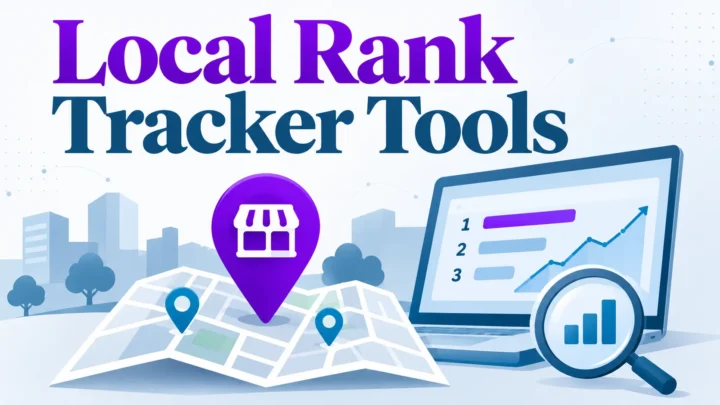
Multi-location businesses can get a misleading picture from a rank tracker that checks keywords from one central point. Customers in other neighborhoods may see…
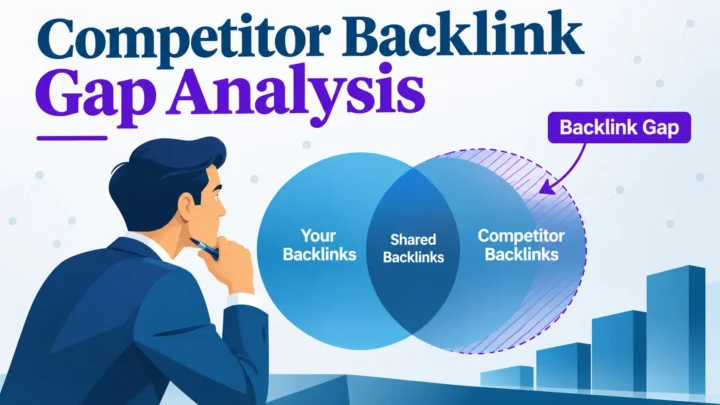
A competitor backlink gap analysis finds domains that link to your competitors but not to you, turning “get more links” into a ranked list…