SEO Audit
Free White Label SEO Audit Tool: What Agencies Actually Get
You’ve found a potential SEO client, reviewed their website, and identified several problems worth fixing. Now you need a professional audit report that explains…
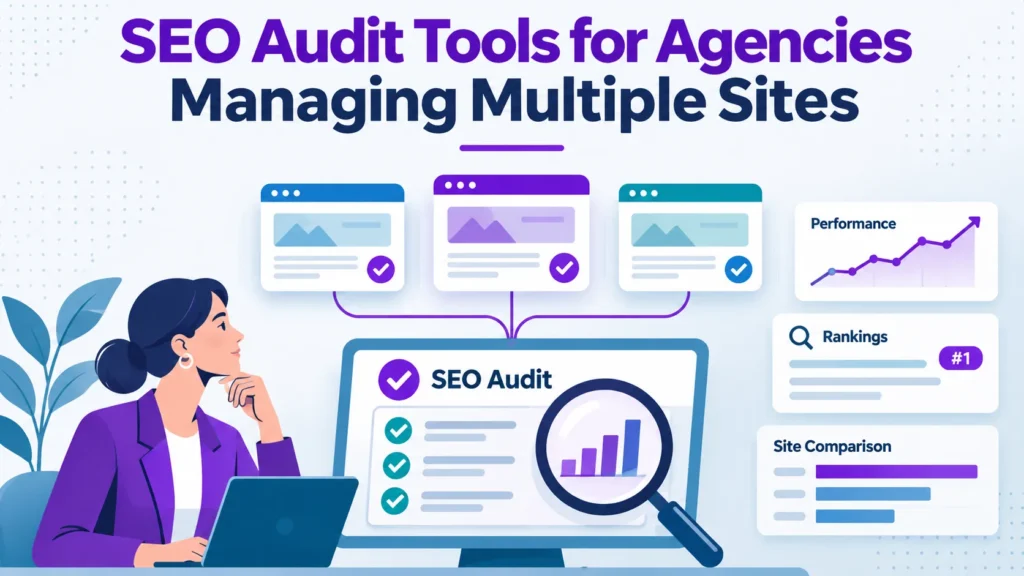
Running one SEO audit is simple. Running forty of them every month, for clients who each expect a branded report by Friday, is a different job. Most audit tools were built for a single website owner. Agencies often find the gaps only after they commit: white-label reports locked behind a higher tier, client workspaces that cannot be separated, or per-site costs that eat into margin as the client list grows.
The best seo audit tool for agencies delivers branded reports, keeps client websites separate, and costs little per managed site at your volume. This guide starts from the operating model, not the feature list. Pricing was verified in September 2026, and figures should be re-checked at purchase. Compare the audit performance of each tool against your real site count, not the plan’s headline price.
An seo audit tool examines a website for technical, on-page and content problems, then turns those findings into a prioritized list of fixes. For an agency, the output matters as much as the analysis. Findings must reach a client who is not an SEO specialist, so the report should turn raw data into clear, prioritized insights the client can act on. Those insights should cover the technical SEO issues that most affect rankings and overall performance across every website the agency manages.
An SEO website audit is a structured check of how well a website can be crawled, indexed and understood by search engines. It covers broken links, redirect chains, missing metadata, duplicate content, page speed and crawlability. A good audit ranks issues by impact, so the team fixes the problems that cost the most traffic first. Google’s SEO starter guide is a useful reference for what search engines look for.
Site-level scores hide the problems that actually lose rankings. A single template error can repeat across hundreds of pages, and a domain-wide score may still look healthy. Page-level detail shows which templates, directories or products carry the damage. An agency can then assign the fix to the right developer and show the client where the effort goes.
Audit tools diagnose the health of a website. Rank trackers measure where keywords appear in search results over time. Desktop crawlers collect raw page data but leave interpretation to the user. Agencies usually run all three, and each should be scored separately.
Our rank tracking comparison shows how widely tracker accuracy varies. That accuracy does not tell you how well an audit tool will perform, because auditing is a different job. Judge audit capability on its own terms: how many pages a crawl covers on your plan, whether issues are grouped usefully for each client, and whether white-label output works in your own account.
Choosing an audit tool for a multi-client book of business starts with the operating model. A tool can post an impressive single-site crawl and still fail an agency. The friction shows up later: reports that cannot carry your branding, client sites that bleed into one another, and a per-site cost that erodes margin as the portfolio grows. Score candidates on five criteria: white-label output, workspace isolation, crawl limits per site, cost per managed site and vendor verification. Check the features each vendor includes at each tier, not only the headline price.
Five criteria to test during a trial:
The weighting should reflect your client mix. An agency serving mostly small local businesses may weight cost per site highest. One running enterprise accounts may weight crawl depth higher. The same logic underpins the weighted scoring in our rank tracker review, where the Rank Tracker Fit Scorecard assigns consistency 25%, location and device precision 15%, cost at volume 15%, SERP-feature coverage 10% and AI visibility 10%. Score audit tools the same way, so each criterion carries an explicit weight you can defend to a client or partner. A free SEO check can help you sanity-test a website before committing to a paid plan.
For a worked calculation, suppose an agency manages a portfolio of client websites and white-label requires a higher plan tier. Cost per site is the plan price divided by the number of sites under management, and it falls as the portfolio grows. Compare that figure against a tool that includes white-label at a lower tier. Pricing changes often, so confirm current US$ plans on each vendor’s pricing page each month before you commit.
Most agencies start with the big full-suite platforms. But in our own testing, a tool’s rank in a general review did not predict how it performed across a portfolio of client websites. Use the five-criterion Agency Audit Fit Matrix to judge each option before reading the individual notes. A tool’s search engine coverage and the quality of its SEO analysis matter more than its general ranking, and the best SEO tool for your agency is the one whose features fit your client workload.
Both platforms bundle site audits with keyword research, backlink data and rank tracking, so one login covers much of an agency’s SEO work. Plan limits, not feature lists, decide what you can run across clients. Check the keyword and project caps on the plan you need before assuming one account covers all your websites. In our rank tracking test, Ahrefs tracked only 50 of 350 keywords, which is a cap worth confirming for your own plan. See our rank tracking results for the full data.
These tools suit agencies that want ongoing health checks more than one-off audits. Ryte is worth shortlisting when you need automated insights from Keyword Monitoring, Anomaly Detection and other reports in a News Feed. Test how alerts are grouped per client before relying on them for reporting, and review the resulting issues each month.
Desktop crawlers give the deepest technical diagnostics, surfacing issues that cloud platforms can miss. Each license is per user and lasts one year, and the tools do not manage client workspaces. Treat them as a complement to a cloud platform, not a replacement.
Google Search Console is free and authoritative for indexing and search performance. It cannot be white-labeled and offers no multi-site audit output. GTmetrix covers page speed well. Use both as verification layers for the cloud tool’s findings, and run a monthly analysis to confirm that flagged SEO issues have been resolved. Checking the content on each page alongside these reports keeps findings tied to what the search engine actually indexes.
These suit quick prospect audits for new business. Their reports are useful for proposals but usually lack the workspace separation a multi-client book needs.
White-label reporting means a tool produces audit and performance reports that carry your agency’s branding instead of the vendor’s. The client sees your logo, colors and domain, and never sees the software underneath. For an agency managing many websites, this is often the deciding factor. A branded report is what you hand to the client, so the SEO analysis and its insights reach the client under your name. Technical SEO findings carry the most weight when they appear in your own report, and the features that generate them should be checked for branding support before purchase.
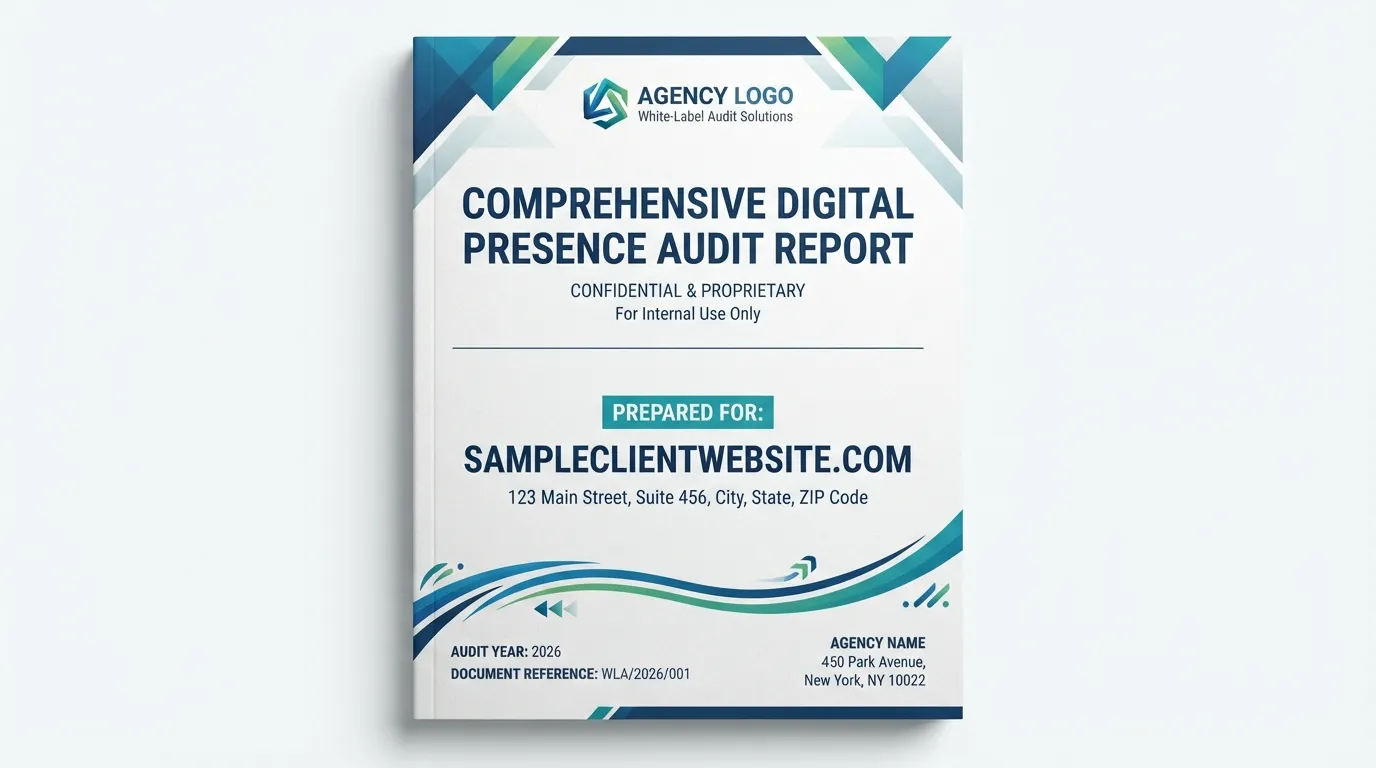
White-label reporting is not always in the base plan. Vendors often reserve it for a higher tier or an add-on, so the price on the homepage can understate the real cost. Before committing, check which plan includes branded exports and whether it applies to every client workspace or only some. Cost per managed site, not the headline monthly fee, drives your margin across all of your clients, and a plan that bills per month may cost more than it first appears once every site is counted.
Some tools do not offer white-label reporting at all. Screaming Frog is a desktop crawler that exports data for you to present, so any branding is applied manually in your own deliverable. Agencies using it need their own report template for their audits. Confirm the position with the vendor’s current documentation before you plan around it.
Do not rely on the marketing page. Run a trial on one of your own client websites, generate a full report, and check three things. The logo and colors should replace the vendor’s branding. The export should work from the client-facing view. The feature should be available on the plan you intend to buy. A claim that fails any of these checks is not a white-label feature for your workflow. Our seo tools guide covers broader selection criteria if you are comparing several options, including how the best SEO platforms handle content and pages across client sites.
In the seven-day test, AccuRanker scored 9.1/10, with 65.4% exact matches and 96.5% within two positions across 350 keywords. SE Ranking and Semrush followed at 8.8 and 8.6. Nightwatch, the strongest tool in the local subset with 95.2% local consistency, scored 8.5 overall. Ahrefs covered only 50 of the 350 keywords and scored 7.6, which shows why coverage must be checked alongside accuracy.
These results come from rank tracking, not audit crawling, so they cannot prove how an audit tool performs. We use them to illustrate how to test for consistency, and you should run the same discipline on audit output before buying. A website’s SEO analysis and performance pages can behave differently from one month to the next, so a single snapshot is not enough. Testing the same content across several search engine results pages gives more reliable insights than one snapshot.
The test measured keyword position accuracy. It says nothing about crawl depth, technical issue detection or white-label output, so those criteria need a separate trial. Pricing was verified in September 2026, so check current US$ plans on each vendor’s pricing page before you commit.
Most agencies choose an audit tool by comparing feature lists. The better test is operational: how many websites you run, how often you audit each one, and how the tool bills you as that number grows. Two agencies on the same tool can end up with different margins, depending on how many sites each runs. Free tiers exist, but their crawl limits often make them unsuitable for client work.
Consider two agencies on the same platform. Agency A manages 10 client websites on a plan that includes white-label reports, so each site carries a share of the monthly fee. Agency B manages the same 10 sites but must buy a higher tier to get branded reports, which raises the cost per site. The software is identical, but Agency B’s margin is smaller, and the gap widens as the client count grows. The plan that includes the features you need matters more than the headline price.
Score each candidate on five criteria, weighted by your client mix:
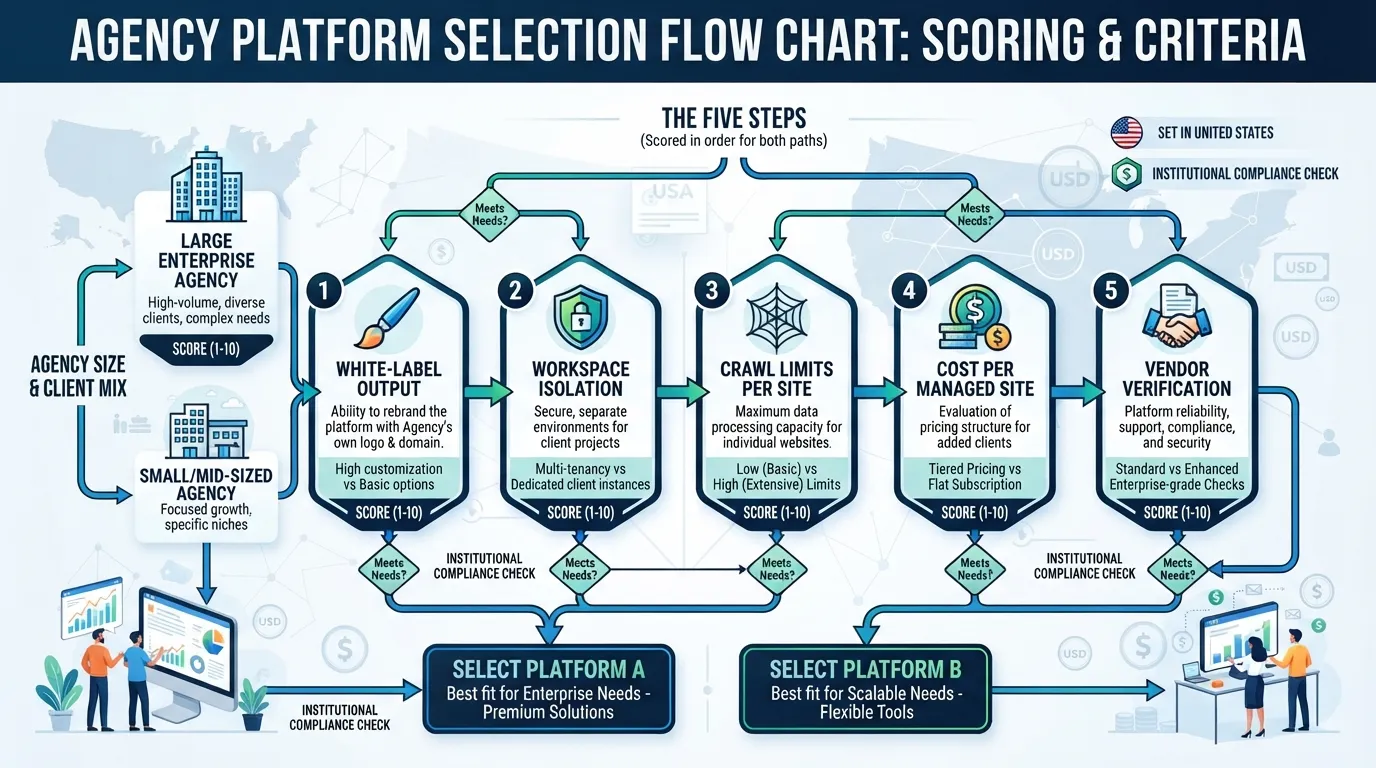
Score each criterion from 1 to 5, multiply by its weight, and rank the results. Our Rank Tracker Fit Scorecard uses the same weighted method, with consistency at 25% and cost at volume at 15%. Pair audit results with keyword research to prioritize the SEO issues that matter most, and use the content gaps they reveal to guide your recommendations.
A small agency with five clients may weight workspace isolation lightly. An agency with 40 clients should weight cost per site and crawl limits most heavily, because those figures compound every month.
Run this list before adding any client to your account:
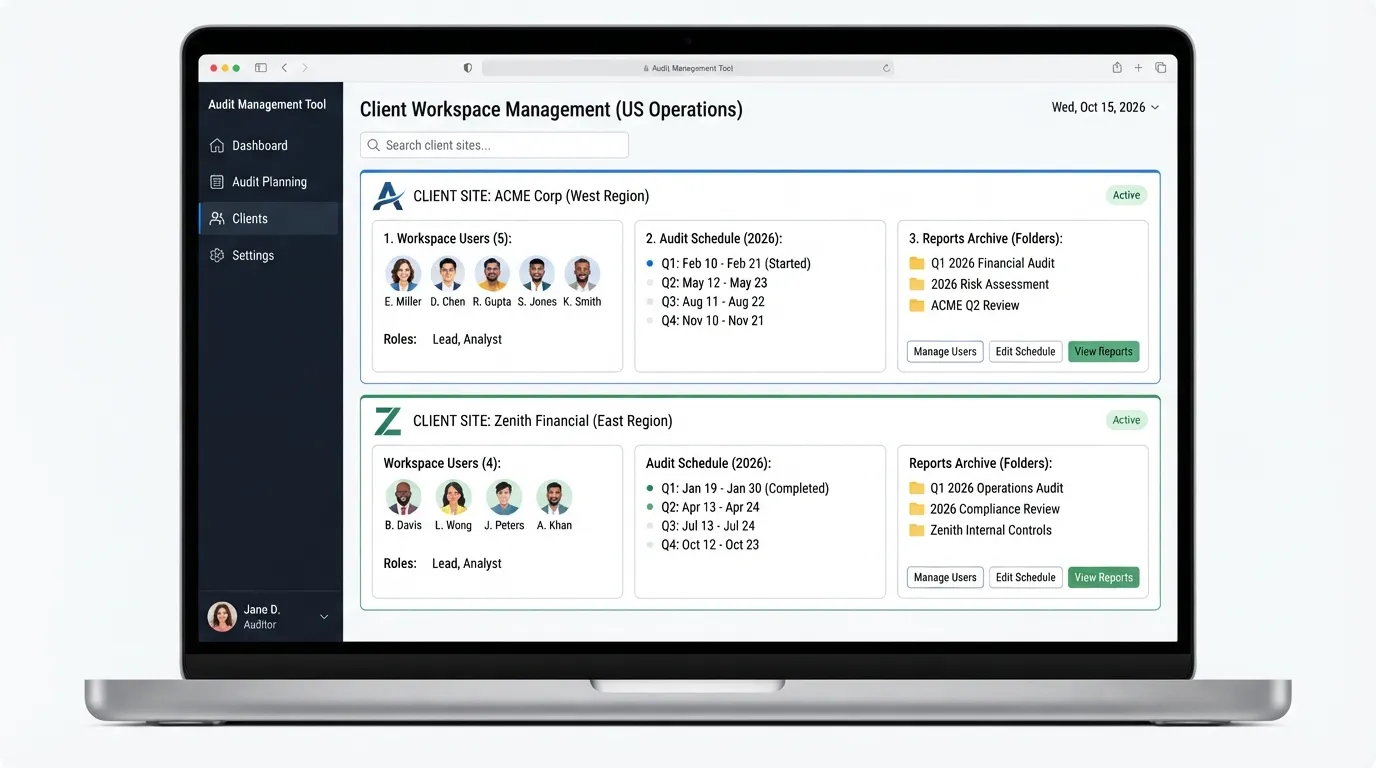
Recheck pricing at the vendor’s site before each purchase. Plans change, so treat any figure here as a snapshot of your ongoing site performance costs.
Choosing an SEO audit tool for an agency is a workflow decision before it is a feature decision. Test white-label output, workspace separation and cost per managed site first, then compare crawl depth across each website you manage. Keep content quality and technical SEO findings in the same workspace so each audit stays connected to the work you deliver.
Use a trial account to confirm each vendor’s white-label claim before buying. If the feature does not appear in the trial, treat the claim as unverified. Confirm current US$ plans on each vendor’s pricing page before you commit.
Rarely, at least not well. Agencies often hit limits on crawl depth, the number of projects per plan and how easily results can be separated by client. In a trial account, check how many sites the plan allows, whether each client gets an isolated workspace, and whether audits can be scheduled without exporting files by hand. If any of these fail, most agencies end up running two tools.
White label means the report carries your agency’s branding, not the software vendor’s. Your logo and colors appear on the document your client receives. The details vary by vendor, so read what each includes before you buy. For how audit reporting fits into a wider toolset, see our guide to seo tools.
Do not assume the tier labeled “agency” on a pricing page includes white labeling. The feature often sits behind a higher plan or an add-on, and that cost changes your margin per client. Work out the cost per managed site: monthly plan price divided by the number of client sites. Confirm the feature in a trial before you commit.
Free tools suit spot checks and prospecting, but they usually fall short on scheduled crawls, multi-client workspaces, white-label output and historical comparison. Google Search Console is free and gives authoritative indexing and search performance data from the search engine, so keep it connected to every client account. Treat free crawlers as a supplement to a paid platform, not a replacement.
Do not rely on the marketing page alone. Follow this procedure during a trial:
If any step fails on the plan you intend to buy, the claim does not apply to your use case.

Tom is the CEO of MediaOne, a leading digital marketing agency. He is a business-experienced SEO consultant as well as a Google Gold Search Expert serving the international community. He has consulted for MNCs like Canon, Maybank, Capitaland, SingTel, ST Engineering, WWF, Cambridge University, as well as Government organisations like Enterprise Singapore, Ministry of Law, National Galleries, NTUC, e2i, SingHealth. His articles are published and referenced in CNA, Straits Times, MoneyFM, Financial Times, Yahoo! Finance, Hubspot, Zendesk, CIO Advisor. Under his stewardship, MediaOne has won dozens of prestigious digital marketing awards.
Run a free Digimetrics audit across SEO, AI search, content and technical health, and get a plan you can act on today.
Start free →You’ve found a potential SEO client, reviewed their website, and identified several problems worth fixing. Now you need a professional audit report that explains…
Your website has hundreds of pages, organic traffic is declining, and you’re not sure what’s causing the problem. Is Google struggling to crawl important…
The best SEO software for a small business is not necessarily the product with the most features. It is the tool that tells you…