SEO Audit
Free White Label SEO Audit Tool: What Agencies Actually Get
You’ve found a potential SEO client, reviewed their website, and identified several problems worth fixing. Now you need a professional audit report that explains…

AI can help marketers research keywords, organize content briefs, identify optimization opportunities, and interpret SEO data. But no single tool does every job equally well. A writing assistant, a technical crawler, and a backlink research platform solve different problems, even when vendors describe all three as AI-powered SEO solutions.
This guide compares 12 established products and free utilities, explains when a paid subscription makes sense, and gives you a practical way to test tools before committing to them.
Pricing and product information checked against vendor websites on November 12, 2026. All dollar amounts are in US dollars unless otherwise stated. Plans, limits, and availability can change.
These tools are not directly interchangeable. Some use AI for writing and recommendations, while others are primarily established SEO data, crawling, or research products with automation or optional AI integrations. The best choice depends on the work you need to complete, not which vendor has the longest feature list.
| Tool | Best for | Representative features | Starting price or free option |
|---|---|---|---|
| Surfer SEO | AI-assisted content optimization | Content Editor, AI writing assistance, content scores, keyword research, and AI visibility options. | From US$49/month, billed annually |
| Ahrefs | Keyword, backlink, and competitor research | Site Explorer, Keywords Explorer, Site Audit, Rank Tracker, Brand Radar, and AI-assisted analysis. | Lite: US$129/month |
| Frase | Content briefs, refreshes, and AI search workflows | Research, drafting, SEO/GEO scores, site audits, publishing integrations, and AI visibility features. | Starter: US$49/month; US$39/month on annual billing |
| Screaming Frog SEO Spider | Technical SEO and site crawling | Broken links, redirects, indexing directives, metadata, duplicate content, structured data, and optional AI integrations. | Free up to 500 URLs; paid license about US$279/year |
| SE Ranking | Agency and in-house SEO management | Rank tracking, keyword and competitor research, audits, backlink monitoring, reports, and AI visibility tracking. | Core: US$129/month; US$103.20/month on annual billing |
| Clearscope | Content optimization and monitoring | Topic discovery, drafting, content guidance, tracked pages, and search/AI visibility monitoring. | Essentials: US$129/month |
| AIOSEO Analyzer | Quick WordPress-focused website checks | Checks metadata, content issues, links, schema, and other on-page or technical signals. | Free website analyzer; separate premium WordPress options |
| SEO.AI Free Tools | Occasional no-cost SEO tasks | Individual utilities for keyword ideas, rewriting, SERP previews, backlink checks, and other SEO activities. | Free individual tools |
| Jasper | On-brand marketing content at scale | Brand context, writing assistance, campaign workflows, collaboration, and governance options. | Pro: US$69/month; US$59/month on annual billing |
| MarketMuse | Topical strategy and content prioritization | Topic research, content inventories, gap analysis, briefs, and planning tools. | Free plan available; paid-plan pricing varies |
| BuzzSumo | Content trends, research, and outreach | Content Analyzer, trending topics, audience questions, brand mentions, and PR-focused research. | Content Creation: US$199/month, billed annually |
| Majestic | Specialist backlink intelligence | Trust Flow, Topical Trust Flow, referring domains, link context, and backlink indexes. | Lite: US$49.99/month |
Comparison note: Prices may reflect a monthly subscription, an annual plan’s monthly equivalent, or a yearly software license. Read the billing terms before comparing them.
Best for: AI-assisted content optimization. A strong fit for teams that need an editor to guide on-page optimization while keeping a human writer involved.
What it does: Content Editor, AI writing assistance, content scores, keyword research, and AI visibility options.
What to consider: Its recommendations are not a substitute for original reporting, expert review, or a full technical site audit.
Pricing: From US$49/month, billed annually. See official pricing and the product website.
Best for: Keyword, backlink, and competitor research. Useful when keyword intelligence, competitor benchmarking, and backlink analysis matter more than text generation.
What it does: Site Explorer, Keywords Explorer, Site Audit, Rank Tracker, Brand Radar, and AI-assisted analysis.
What to consider: A comparatively substantial cost for a single small website; some data and features depend on the plan.
Pricing: Lite: US$129/month. See official pricing and the product website.
Best for: Content briefs, refreshes, and AI search workflows. Connects topic discovery, content production, optimization, and monitoring in one workflow.
What it does: Research, drafting, SEO/GEO scores, site audits, publishing integrations, and AI visibility features.
What to consider: Starter-plan limits on sites, articles, and audit pages can matter for agencies.
Pricing: Starter: US$49/month; US$39/month on annual billing. See official pricing and the product website.
Best for: Technical SEO and site crawling. Provides granular technical diagnostics and exports for fixes at scale.
What it does: Broken links, redirects, indexing directives, metadata, duplicate content, structured data, and optional AI integrations.
What to consider: Desktop software with a learning curve; primarily a crawler, not an AI writing assistant.
Pricing: Free up to 500 URLs; paid license about US$279/year. See official pricing and the product website.
Best for: Agency and in-house SEO management. A broad platform for repeatable campaigns and reporting across multiple projects.
What it does: Rank tracking, keyword and competitor research, audits, backlink monitoring, reports, and AI visibility tracking.
What to consider: Its former Essential, Pro, and Business plans are legacy plans; compare the current Core and Growth offerings.
Pricing: Core: US$129/month; US$103.20/month on annual billing. See official pricing and the product website.
Best for: Content optimization and monitoring. Fits editorial teams that publish and refresh content routinely.
What it does: Topic discovery, drafting, content guidance, tracked pages, and search/AI visibility monitoring.
What to consider: It is centered on content workflows rather than deep technical crawling or backlink exploration.
Pricing: Essentials: US$129/month. See official pricing and the product website.
Best for: Quick WordPress-focused website checks. An approachable starting point for a quick audit without committing to a full SEO suite.
What it does: Checks metadata, content issues, links, schema, and other on-page or technical signals.
What to consider: The website analyzer and the WordPress plugin are distinct products; findings still require human prioritization and fixes.
Pricing: Free website analyzer; separate premium WordPress options. See official pricing and the product website.
Best for: Occasional no-cost SEO tasks. Convenient for checking an idea or completing a discrete task without a full platform subscription.
What it does: Individual utilities for keyword ideas, rewriting, SERP previews, backlink checks, and other SEO activities.
What to consider: Separate tools do not automatically create a connected, reliable reporting workflow.
Pricing: Free individual tools. See official pricing and the product website.
Best for: On-brand marketing content at scale. Helps teams maintain messaging and terminology across multiple writers and campaigns.
What it does: Brand context, writing assistance, campaign workflows, collaboration, and governance options.
What to consider: A marketing content platform, not a replacement for specialized keyword databases, crawlers, or rank trackers.
Pricing: Pro: US$69/month; US$59/month on annual billing. See official pricing and the product website.
Best for: Topical strategy and content prioritization. Useful when deciding which content to create, update, or consolidate across a site.
What it does: Topic research, content inventories, gap analysis, briefs, and planning tools.
What to consider: Higher-value workflows depend on usage limits and paid capabilities; assess them against publishing volume.
Pricing: Free plan available; paid-plan pricing varies. See official pricing and the product website.
Best for: Content trends, research, and outreach. Valuable for finding topics and formats that earn attention beyond the search results page.
What it does: Content Analyzer, trending topics, audience questions, brand mentions, and PR-focused research.
What to consider: Not a technical SEO audit tool or a substitute for keyword-rank and backlink platforms.
Pricing: Content Creation: US$199/month, billed annually. See official pricing and the product website.
Best for: Specialist backlink intelligence. Useful for link-profile comparisons, prospect evaluation, and link-related investigations.
What it does: Trust Flow, Topical Trust Flow, referring domains, link context, and backlink indexes.
What to consider: Its core focus is backlinks; it does not provide a complete AI content creation or on-page SEO suite.
Pricing: Lite: US$49.99/month. See official pricing and the product website.
AI SEO tools apply machine learning, language models, or AI-assisted analysis to tasks such as keyword clustering, content planning, SEO audits, and performance interpretation. Traditional SEO software generally provides measurements and reports. AI-assisted products may add recommendations or drafts on top of those data sources.
Neither approach eliminates the need for judgment. Keyword volumes are estimates, content scores are vendor-specific signals rather than Google ranking factors, and generated text can contain factual errors.
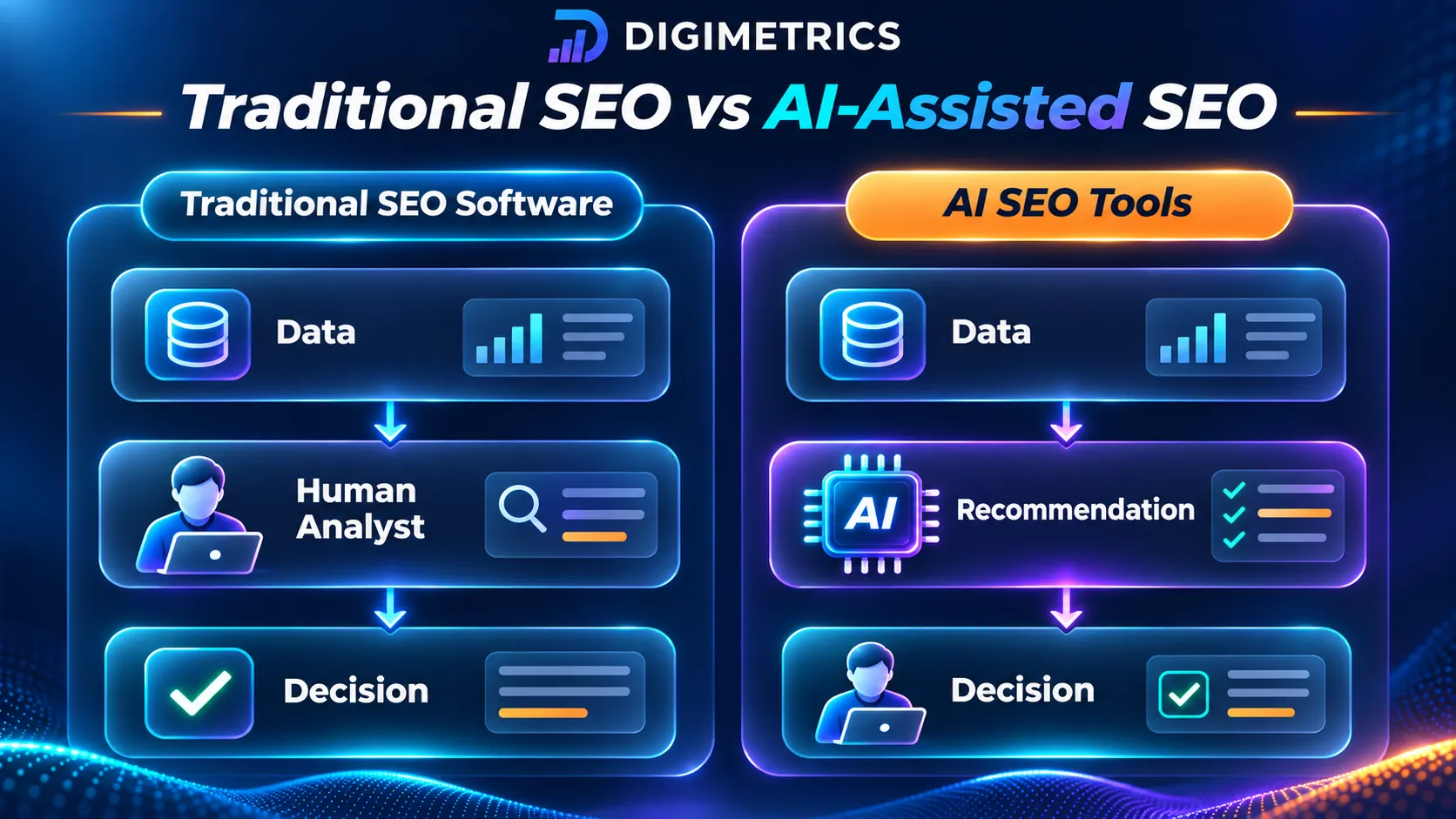
A practical distinction: an AI chatbot without connected live datasets should not be treated as a reliable source of current ranking positions, search volumes, or backlink counts. Obtain those measurements from appropriate SEO tools.
For a small website, free tools can cover much of the initial diagnostic work. Google Search Console supplies first-party search performance and indexing information for verified properties. Screaming Frog’s free version lets you crawl up to 500 URLs, while AIOSEO and SEO.AI offer no-cost tools for specific checks.
Before upgrading, compare five practical limits: the number of pages or keywords allowed, data depth and freshness, export options, team access, and whether the terms of use permit client work.
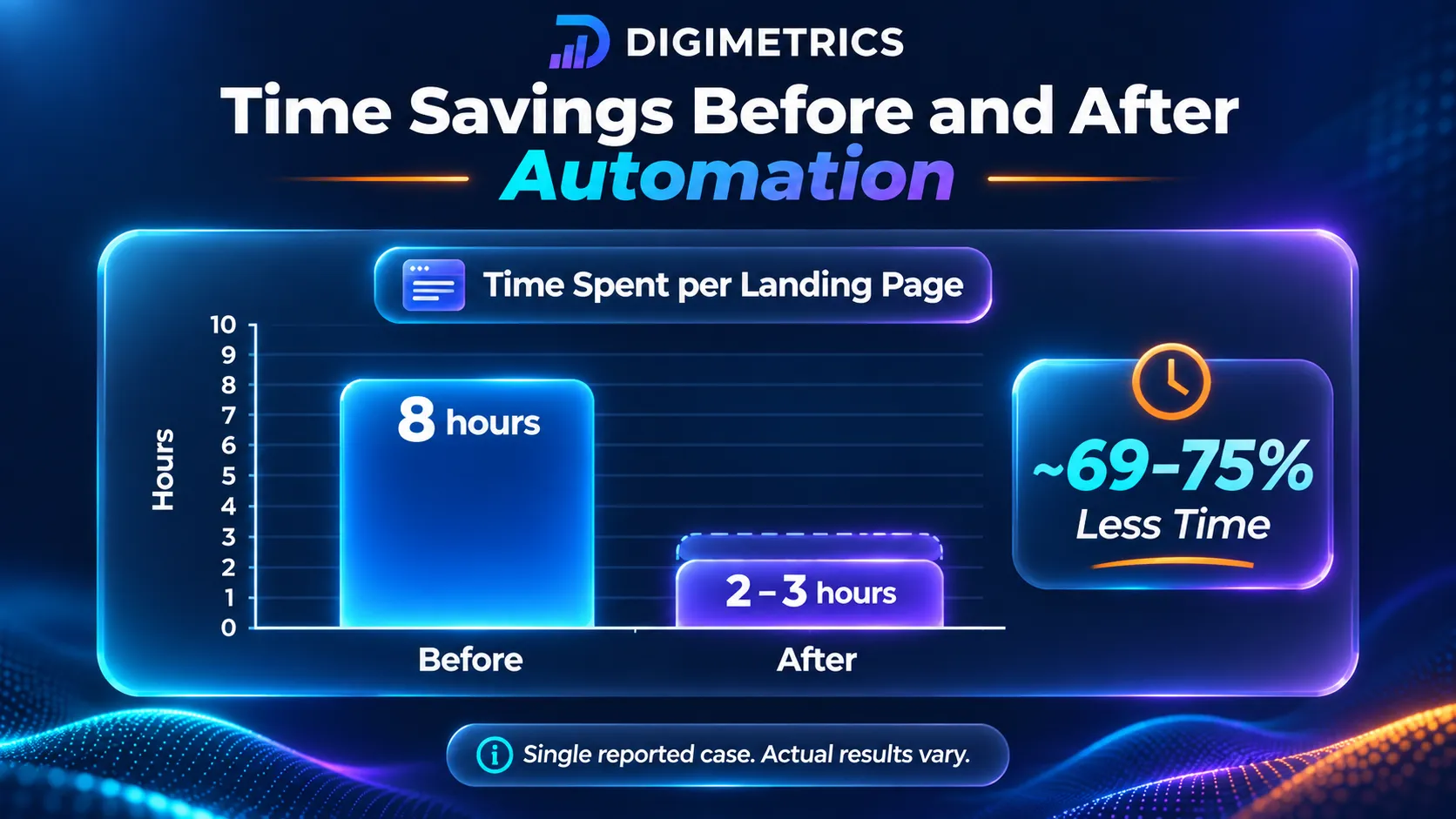
Paid SEO tools can be worthwhile when they reduce repetitive work or make reliable analysis possible at a useful scale. For example, a marketer writing for Marketer Milk described reducing a content workflow from roughly eight hours to two or three hours through automation. That is one person’s reported experience, not a guarantee for another team.
Please calculate the value based on your own workload. If a tool saves three hours per week and the relevant labor cost is US$40 per hour, the estimated time value is US$120 per week, or about US$520 per month on a 52-week annual basis. Subtract the tool’s total monthly cost, including additional seats or credits, before deciding whether it is worth paying for.
Simple evaluation formula: (Monthly hours saved × hourly cost) − total monthly tool cost = estimated monthly net time value. This calculation measures capacity, not automatically realized cash savings or additional revenue.
A better approach than buying the largest platform is to identify your bottleneck and choose software that addresses it directly.
Start with platforms such as Ahrefs or SE Ranking when you need keyword estimates, competing-page data, backlink analysis, or ongoing rank tracking. Compare results for the same market and seed keywords before selecting a subscription.
Surfer, Frase, Clearscope, and MarketMuse approach content planning from different angles. Test them on a real page to determine whether their recommendations improve completeness and usefulness rather than merely increasing word count or keyword repetition.
Use a crawler such as Screaming Frog to investigate redirects, metadata, indexability directives, internal links, and technical errors. For simpler checks, AIOSEO Analyzer offers a free starting point. AI summaries can help prioritize findings, but they should not replace validation on the live site.
Jasper is worth considering when a team needs consistent brand language across campaigns. BuzzSumo is more relevant for topic research, outreach, and content performance discovery. Neither replaces a technical SEO platform.
Majestic focuses on backlinks and proprietary link-quality metrics. Use such metrics as comparative research aids, not as Google’s own measures of authority or guaranteed ranking predictors.
| Team | Recommended approach | Before upgrading |
|---|---|---|
| Solo website owner | Search Console + free audit utilities | Check whether any essential task is blocked. |
| Solo marketer or small team | One paid solution for the main bottleneck | Measure time saved across several pieces of work. |
| Growing content team | Research platform + content optimization tool | Confirm collaboration, limits, and publishing integrations. |
| Agency or multi-site team | Broader platform + specialized crawler and research tools | Test reporting, access controls, and per-client economics. |
The biggest risks are not simply that AI writes words. They arise when a team publishes inaccurate information, repeats existing pages without adding value, or creates large numbers of low-quality pages to influence rankings.
Google’s guidance on generative AI content emphasizes accuracy, quality, relevance, and fact-checking. Its spam policies address scaled content abuse regardless of whether the material is produced with AI or another method.
Use this process to keep AI assistance inside a measurable, quality-controlled publishing routine.
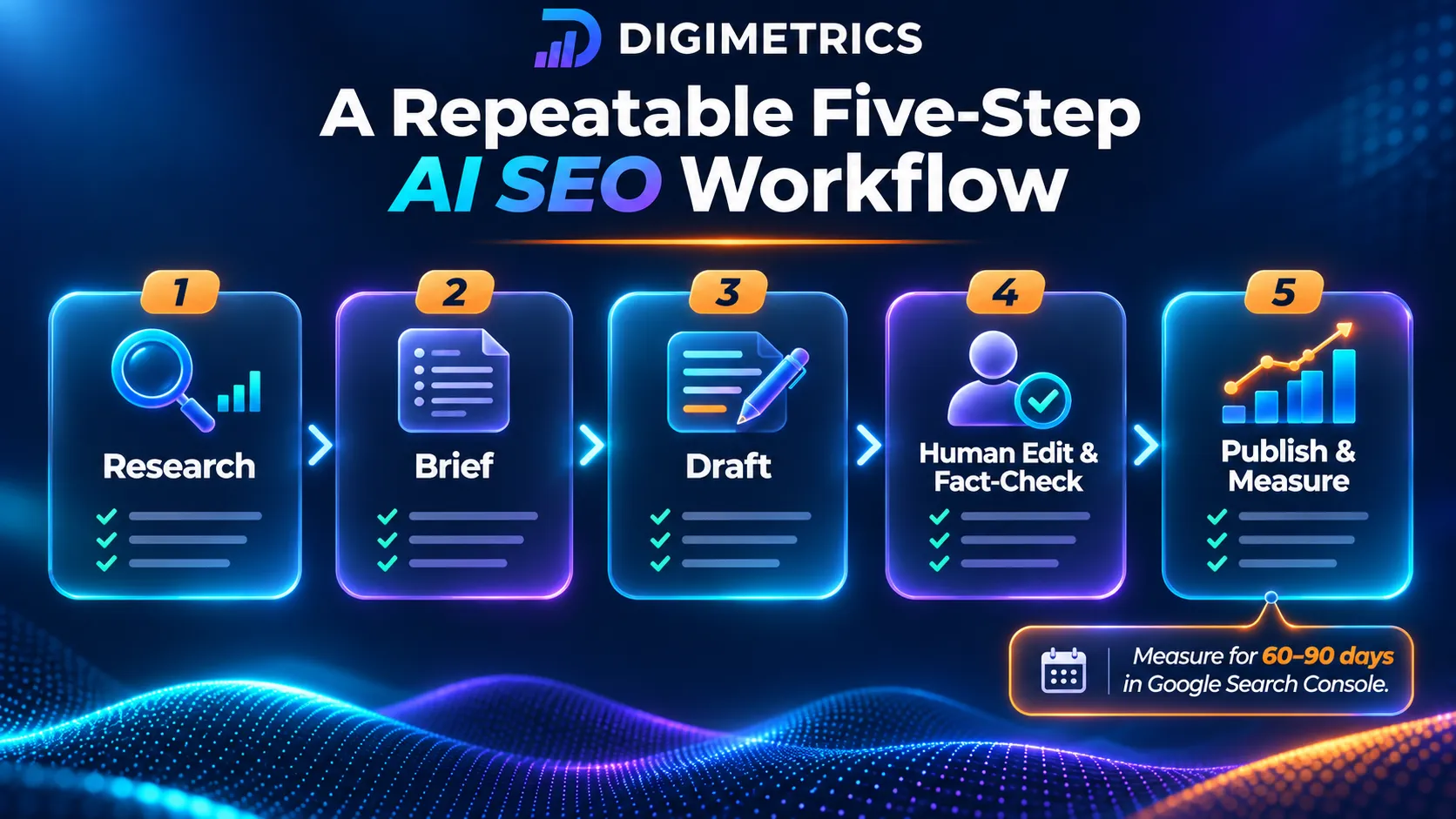
Use the results to decide whether to update, expand, merge, or leave the page as it is. SEO measurement is iterative, and many factors outside the writing workflow can affect rankings.
The best AI SEO tool is the one that makes a defined task easier without weakening accuracy or editorial quality. Start with your biggest bottleneck, use free data and trials to establish a baseline, and compare the full cost of each subscription with the value it actually provides.
For most teams, a sensible setup combines trustworthy search data, a specialized tool for the highest-priority task, and a person responsible for the final decision. That is more dependable than buying every AI feature or publishing automatically generated pages at scale.
They can be. Google Search Console is free, and several audit and research tools offer no-cost features. Begin there if you manage a single small site, then upgrade when a concrete task requires deeper data, more volume, or collaboration.
No single tool can take responsibility for business goals, search intent, accurate claims, technical priorities, and editorial quality. Automation can reduce repetitive work, but skilled review remains important.
AI assistance by itself is not the issue. Google warns against low-value, unoriginal content produced at scale primarily to manipulate search rankings. Accuracy, relevance, originality, and usefulness matter more than the drafting method.
Start with Google Search Console and a free audit tool to understand the site’s current condition. Then choose a trial based on the specific problem: research, content optimization, technical fixes, or competitor analysis.
Track hours saved, work completed, the number of corrections required, and changes in relevant SEO outcomes. Compare these results with the full cost of the subscription. An increase in output alone does not prove that the tool is valuable.
No. The list intentionally includes established SEO software such as Screaming Frog, BuzzSumo, and Majestic. They are useful comparisons because AI features cannot replace every source of reliable SEO data or every specialist workflow.

Tom is the CEO of MediaOne, a leading digital marketing agency. He is a business-experienced SEO consultant as well as a Google Gold Search Expert serving the international community. He has consulted for MNCs like Canon, Maybank, Capitaland, SingTel, ST Engineering, WWF, Cambridge University, as well as Government organisations like Enterprise Singapore, Ministry of Law, National Galleries, NTUC, e2i, SingHealth. His articles are published and referenced in CNA, Straits Times, MoneyFM, Financial Times, Yahoo! Finance, Hubspot, Zendesk, CIO Advisor. Under his stewardship, MediaOne has won dozens of prestigious digital marketing awards.
Run a free Digimetrics audit across SEO, AI search, content and technical health, and get a plan you can act on today.
Start free →You’ve found a potential SEO client, reviewed their website, and identified several problems worth fixing. Now you need a professional audit report that explains…
Your website has hundreds of pages, organic traffic is declining, and you’re not sure what’s causing the problem. Is Google struggling to crawl important…
The best SEO software for a small business is not necessarily the product with the most features. It is the tool that tells you…