Creative testing platforms make an appealing promise: connect your advertising accounts, analyse your creatives, and find out which ads work best. Some provide statistical significance calculations. Others use AI to identify winning hooks, visual concepts, messaging angles, and formats. A few can generate variations and help manage experiments directly.
But there’s a problem that becomes obvious once you start thinking about a real advertising budget. Having enough money to run multiple ads doesn’t necessarily mean you have enough data to identify a statistically reliable winner.
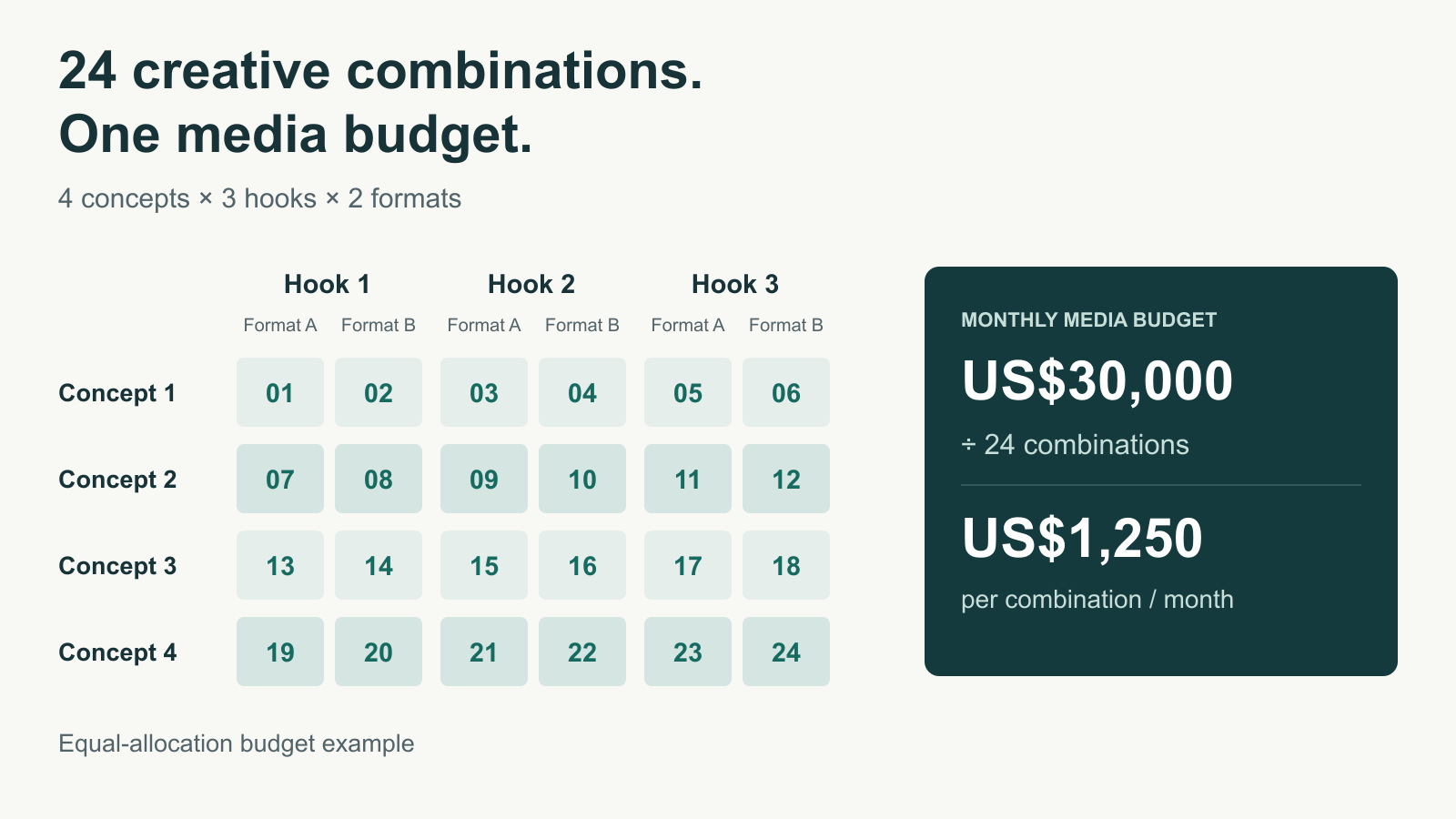
Imagine you’re spending $30,000 a month on paid social and want to test four concepts, three hooks, and two formats. That sounds manageable until you calculate what you’re actually asking the advertising account to support: 24 creative combinations, each competing for delivery, attention, and conversions.
If you split the budget evenly, that’s only $1,250 per combination each month. And if your primary performance metric is purchases rather than clicks, you may have too few conversion events to distinguish a genuine improvement from normal performance variation.
This is where creative testing software starts to show its real value, or its limitations. A useful platform should help you understand what your budget can reasonably test, organise ads into meaningful creative concepts, account for inconsistent delivery, and avoid drawing overly confident conclusions from weak evidence.
In this guide, we’ll compare different types of creative testing platforms, explain the statistical problems they need to handle, and show how to choose the right approach for your advertising budget. We’ll also look at actual products, including Meta Ads Manager, TikTok Ads Manager, Motion, Vidmob, CreativeX, and Marpipe.
Our main question: Which tools help you make better creative decisions, rather than simply produce more confident-looking reports?
A creative testing platform helps advertisers understand how different advertising ideas, designs, messages, and formats perform.
Depending on the product, it may support experiment setup, creative performance analysis, asset organisation, automated tagging, or reporting.
For example, an e-commerce company might want to compare three advertising approaches:
A product demonstration.
A customer testimonial.
A problem-and-solution video.
Each concept could use different hooks, headlines, and formats.
A creative testing tool might help the company organise those variations, compare their performance, and identify which approaches deserve further investment.
However, not every creative testing platform performs the same function.
Some run controlled experiments. Others analyse historical advertising data. A third category helps produce or rotate creative variations.
These differences are important because reporting that one creative performed better is not the same as proving that the creative caused better performance.
Creative Testing Platforms Compared
Before choosing software, decide whether you need a controlled experiment, creative analytics, or automated production and variation management.
Catalog creative production, variation management, and product-feed workflows
Creative production and optimisation
Its current product focus should not be confused with guaranteed statistical testing functionality
This is a capability comparison based on official product information, not a ranking derived from completed head-to-head testing. Commercial terms and functionality may change.
The products aren’t all direct substitutes.
For example, TikTok’s native split testing is designed to compare controlled advertising treatments, while Motion focuses on helping marketers understand their creative performance data.
A business may benefit from using both types of tools, but it shouldn’t assume they produce the same kind of evidence.
1. Meta Ads Manager: Best Starting Point for Controlled Meta Experiments
Best for: Advertisers who primarily run Facebook and Instagram campaigns and want to test creative differences without immediately adding another paid subscription.
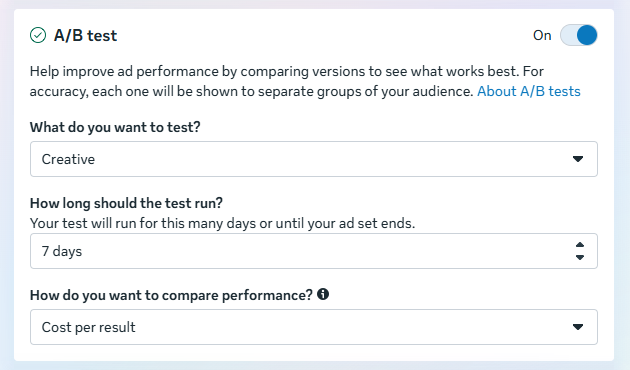
Meta provides native experimentation capabilities through Ads Manager, including A/B testing and other measurement studies.
Its official training material describes A/B tests, creative tests, conversion lift studies, and brand lift studies as distinct measurement approaches.
For a business running most of its advertising on Meta, native testing is often the logical starting point.
Instead of comparing two unrelated campaigns with different audiences and budgets, you can use an appropriate testing setup to investigate a defined creative change.
What Makes Meta Useful?
The main advantage is that experimentation takes place within the advertising environment itself.
You can focus on a particular hypothesis, choose an appropriate outcome, and examine the results within the platform where the ads are delivered.
For example, you might test whether a customer testimonial performs better than a product demonstration for generating qualified leads.
However, that requires a defined comparison.
If the testimonial runs against a warm retargeting audience while the demonstration runs against cold prospects, a better cost per lead doesn’t establish that the testimonial is the stronger creative.
The audience difference may explain the outcome.
Native experimentation helps address this problem when the test is configured correctly.
Limitations
Meta’s testing tools don’t eliminate the need for a suitable budget, adequate conversion volume, or a clear hypothesis.
You can still run a test that produces too little information to support a useful conclusion.
And if your objective is understanding patterns across hundreds of existing creatives, Meta’s native reporting may not provide the same creative-tagging workflow as a dedicated analytics product.
Our recommendation: Start here when you’re testing a specific change within Meta campaigns. Consider additional analytics software when your main problem becomes understanding large collections of creatives across multiple campaigns.
2. TikTok Ads Manager: Best for Native Creative Split Testing on TikTok
Best for: Advertisers running TikTok campaigns who need a controlled way to compare creative approaches.
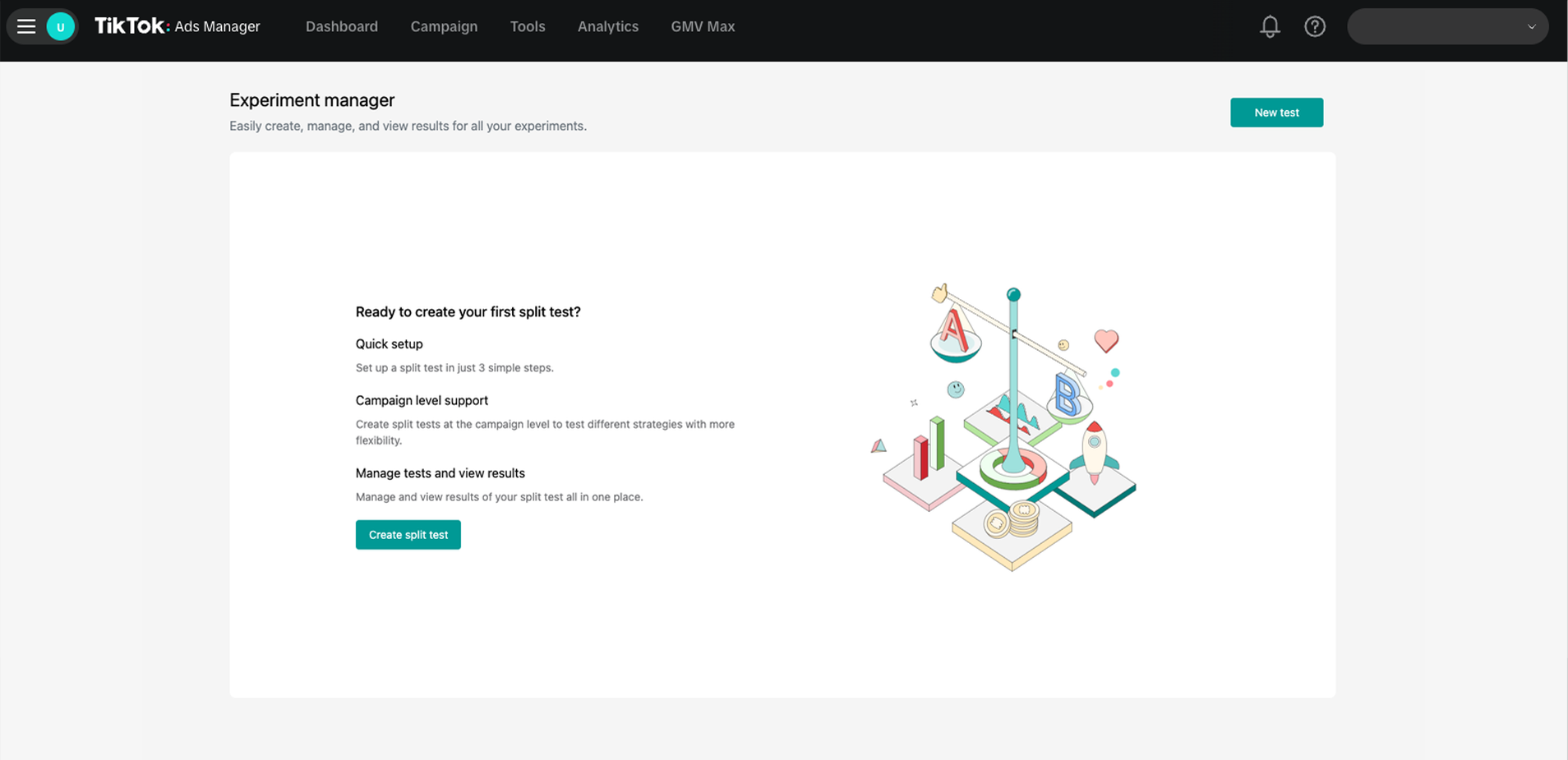
TikTok Ads Manager offers split testing that can compare different campaign variables, including creative assets.
Its official documentation describes splitting audiences into separate groups to compare the performance of the selected treatments.
The platform also provides an estimated testing power based on the budget entered during test setup.
That’s particularly useful because statistical power is one of the first things advertisers should understand before launching an experiment.
Why Testing Power Matters
Imagine you’re considering a test between two TikTok video hooks.
One opens with a product demonstration, while the other starts with a customer explaining a common problem.
You want to find out which hook generates more purchases.
Before launching, the important question isn’t simply whether TikTok can deliver both videos.
It’s whether the proposed budget and expected conversion volume are likely to detect a commercially meaningful difference.
TikTok’s testing guidance acknowledges this planning requirement.
The platform also recommends changing one variable at a time when the objective is understanding the impact of a specific difference.
Creative Fatigue Still Matters
TikTok’s advertising documentation also addresses creative fatigue, including situations where audiences become overexposed to an advertisement.
A video that performs well during its first week may become less effective after repeated exposure.
That doesn’t necessarily mean the creative was poor. Its audience exposure and delivery conditions may have changed.
If you’re comparing creatives launched at different times, you need to consider how long they’ve been running and how frequently people have seen them.
Limitations
Native split testing is valuable for defined comparisons, but it may not replace creative analytics across a large account.
If your team wants to group all testimonial videos, demonstrations, and creator-led concepts across several campaigns, additional organisation or analytics software may be useful.
Our recommendation: Use TikTok’s native split testing when you need a controlled comparison. Avoid treating every difference between ordinary ads as a formal A/B test.
3. Motion: Best for Creative Concept Grouping and Reporting
Best for: Performance marketers, creative strategists, and agencies that need to understand which advertising ideas work across different campaigns.
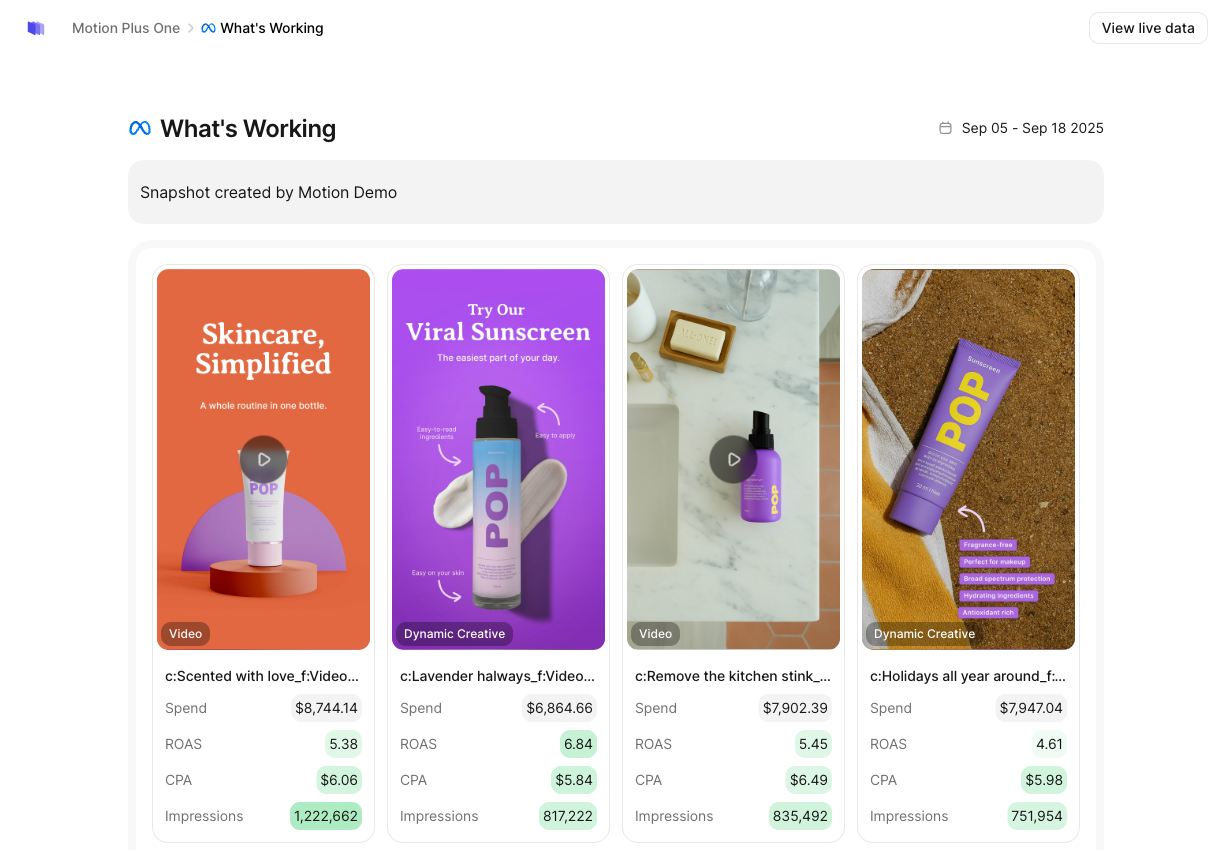
Its platform helps teams organise advertising data, identify performance patterns, group creatives, and translate those observations into new creative briefs.
This addresses a common problem in paid social advertising.
A business may have dozens or hundreds of active ads spread across campaigns, ad sets, audiences, and placements.
Looking at each advertisement individually can make it difficult to identify which creative concepts are working consistently.
Why Concept Grouping Is Valuable
Imagine a skincare brand runs 18 advertising variations across several campaigns.
Six focus on before-and-after transformations, six use customer testimonials, and six demonstrate how the product works.
If the ads have different names, audiences, and launch dates, a standard campaign report may not clearly reveal which creative approach performs best.
Motion supports creative-level reporting and grouping using AI or custom tags.
Its documentation explains that marketers can aggregate creative performance across ad sets and campaigns, then analyse dimensions such as messaging angle, asset type, and visual format.
This makes it easier to ask questions like:
Do customer testimonials consistently generate more qualified traffic than product demonstrations?
Or:
Are short creator-led videos associated with better performance than polished brand videos?
These questions can guide the next round of creative production.
Motion’s Pricing
Motion’s official pricing page advertises a Starter plan at $250 per month for smaller brands spending up to $50,000 monthly on advertising.
It includes creative analytics, AI tags, an ad leaderboard, and unlimited seats and ad accounts, subject to the plan’s spend limit.
Larger plans use custom pricing.
What Motion Doesn’t Automatically Prove
Here’s an important distinction.
Grouping performance across campaigns is useful for finding patterns, but it doesn’t remove every possible confounding factor.
For example, customer testimonials might have been shown mostly to returning visitors while demonstrations were shown to new prospects.
If testimonials performed better, the audience mix may have contributed to the result.
Motion can help identify that pattern, but a controlled test may still be necessary to establish whether the creative concept itself caused the difference.
Our recommendation: Motion is particularly worth investigating when the problem is organising creative performance and deciding what to produce next, rather than running a single formal experiment.
4. Vidmob: Best for Analysing Individual Creative Elements
Best for: Larger advertising teams, brands producing substantial creative volume, and organisations seeking detailed analysis of visual and messaging elements.
Its analytics system examines attributes within advertising assets and connects those attributes with available performance information.
According to Vidmob’s documentation, its analysis can identify elements such as visual composition, text, branding, human presence, language, and other creative characteristics.
This allows marketers to investigate how different creative decisions relate to performance.
What Does Element-Level Analysis Look Like?
Imagine a brand wants to understand whether product demonstrations featuring a person perform differently from demonstrations showing only the product.
Instead of manually categorising hundreds of ads, creative analysis software can help identify which assets contain particular characteristics.
The team can then compare outcomes associated with those attributes.
Other useful questions might include whether high-contrast text performs better, whether branding in the opening frames is associated with stronger engagement, or whether different CTA styles correlate with conversions.
These insights may help creative teams develop more consistent production guidelines.
The Importance of Sufficient Creative Volume
Vidmob’s own methodology materials discuss the importance of sufficient creative volume when producing element-level insights.
Its documentation refers to a 30-creative threshold in certain analytical contexts, intended to support more reliable interpretation.
That is an important reminder: advanced creative analytics may be less useful when an account has only a handful of ads.
If every creative element appears in only one or two advertisements, it becomes difficult to separate the apparent effect of that element from other differences between the ads.
Limitations
Element-level performance analysis is observational unless supported by an appropriate experimental design.
A report showing that videos with human faces had higher engagement doesn’t automatically prove that adding faces caused the improvement.
Those videos may also have had different messages, audiences, budgets, or production quality.
Vidmob’s public materials describe a substantial creative analytics offering, but pricing for the relevant package should be confirmed directly.
Our recommendation: Evaluate Vidmob when your team has enough creative volume to investigate recurring patterns across assets, rather than expecting reliable conclusions from only a few variations.
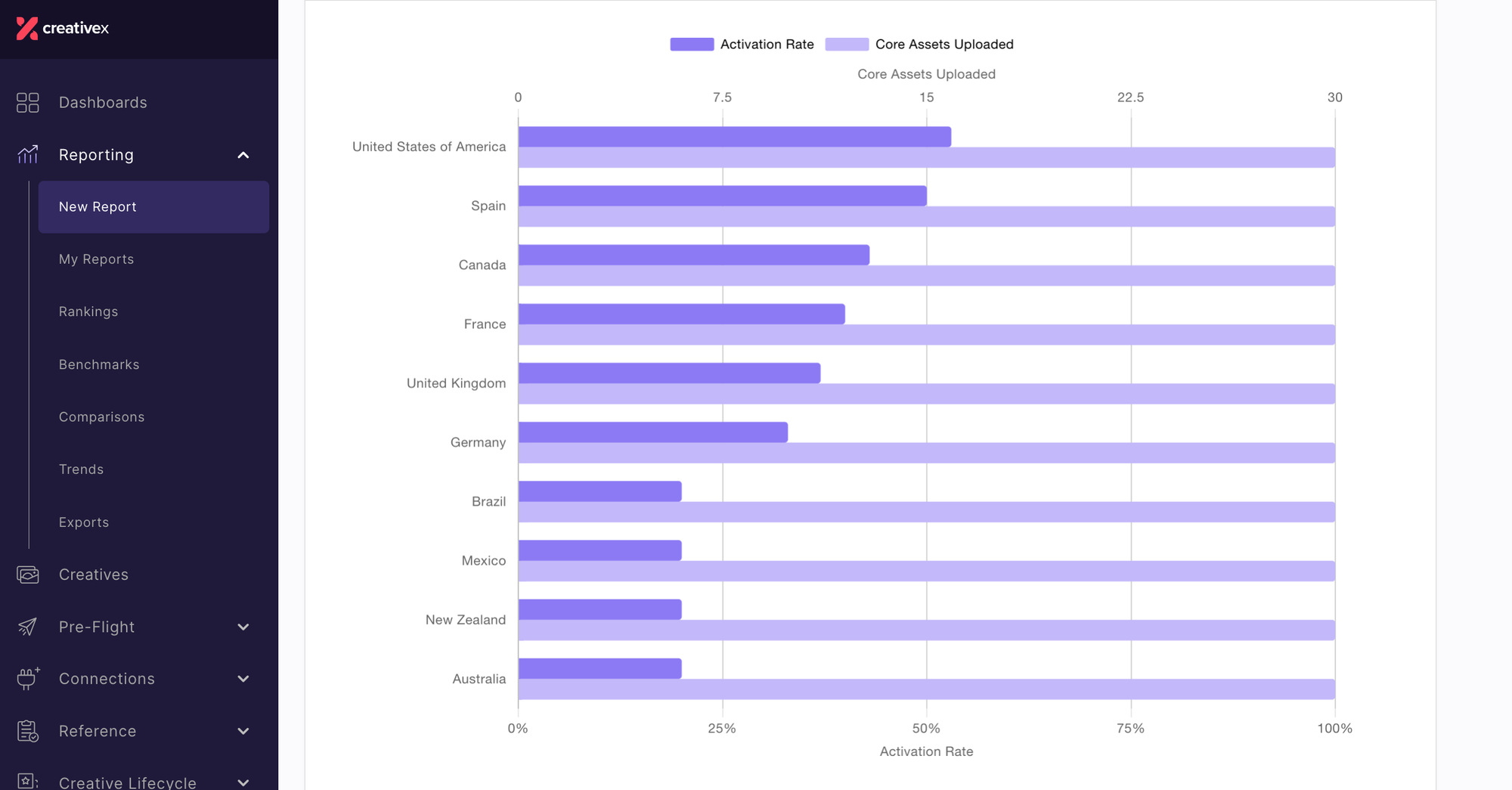
5. CreativeX: Best for Creative Quality and Cross-Market Governance
Best for: Large brands managing advertising assets across multiple markets, agencies, platforms, or internal teams.
CreativeX focuses on measuring creative quality, digital suitability, and the management of creative assets at scale.
Its platform helps organisations understand whether advertising content follows relevant guidelines and how creative practices vary across their marketing operations.
This solves a different problem from a basic creative A/B test.
A multinational brand may publish thousands of advertising assets across countries and platforms.
Some might fail to follow platform-specific creative recommendations. Others may be produced but barely used, or reused without a clear view of previous performance.
A creative governance platform helps identify and manage these issues.
Where CreativeX Becomes Useful
Imagine a consumer brand works with several regional agencies.
Each team produces video ads with different approaches to branding, captions, product visibility, and platform formatting.
CreativeX can help the organisation examine creative quality and production patterns across those assets.
Its Creative Quality product focuses on digital suitability, while its broader creative lifecycle capabilities address how assets are created, activated, and reused.
This can support more consistent creative operations.
Creative Quality Isn’t the Same as Incremental Lift
A high creative quality score doesn’t automatically mean an ad will generate the most conversions.
A technically suitable advertisement may perform poorly because of its message, offer, audience, or competitive environment.
Likewise, an unusual creative that performs well may not follow every general best-practice recommendation.
A useful quality framework can guide production, but it shouldn’t be treated as a substitute for evaluating actual campaign outcomes.
CreativeX pricing for the relevant enterprise use cases is generally handled through direct commercial discussions.
Our recommendation: Consider CreativeX when managing creative quality and production standards across a large organisation. It isn’t the most obvious starting point for a small account that simply needs to compare two ad concepts.
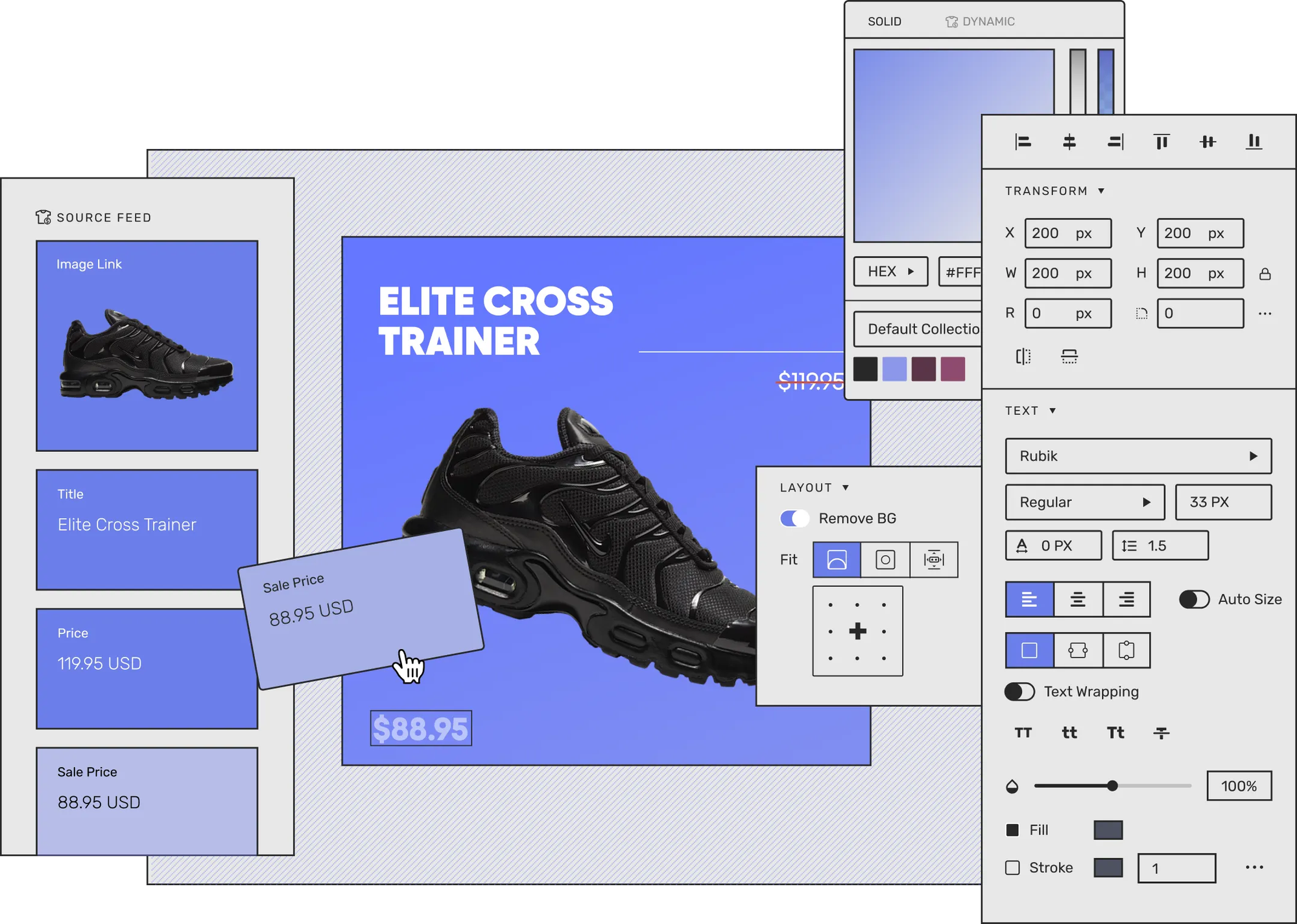
6. Marpipe: Best for Catalog Creative and Variation Management
Best for: E-commerce advertisers producing and managing many catalog-based creative variations.
Marpipe has a history of multivariate creative testing, including generating combinations of creative elements and analysing their performance.
However, its current product positioning places substantial emphasis on catalog creative, product feeds, and dynamic product advertising.
That distinction matters when comparing today’s tools.
An older article about Marpipe’s multivariate testing capabilities shouldn’t automatically be treated as proof that every historical testing feature is included in its current subscription packages.
If you’re using AI-generated images or automated creative variations, make sure the resulting advertisements accurately represent your products. Our guide to disclosing AI-generated images in ads explains when synthetic advertising visuals may require additional disclosures and why an AI label doesn’t automatically make a misleading image acceptable.
What Marpipe Offers
Its current public offering includes catalog design, product-feed management, and tools for creating multiple advertising variations from product information.
For a retailer with hundreds or thousands of SKUs, that can reduce the manual work required to produce and maintain product advertising assets.
Instead of designing every product ad separately, businesses can develop templates and use product information to generate variations.
Marpipe’s current pricing page advertises a free catalog creative option, a Startup tier from $199 per month, and higher-tier options for more extensive catalog requirements.
When to Consider Marpipe
Marpipe may be valuable when your biggest challenge is producing, updating, and managing product-specific advertisements at scale.
For example, an e-commerce business could use different creative treatments for discounted products, premium products, or seasonal collections.
But generating many variations doesn’t automatically mean they have been tested under a statistically controlled experiment.
If formal experimentation is the objective, confirm the exact testing features and workflow available in the current product.
Our recommendation: Shortlist Marpipe for catalog-driven creative operations, but verify its present-day experimental capabilities rather than relying on historical descriptions of its multivariate testing platform.
The Four Statistical Problems Creative Testing Platforms Need to Handle
Now that we’ve covered the products, let’s address the part that actually determines whether your test results are trustworthy.
Creative testing doesn’t become statistically rigorous simply because software displays a confidence percentage.
The experiment needs a suitable design, appropriate data, and a method for handling uncertainty.
1. Multiple Comparisons Can Produce False Winners
Imagine you’re testing 12 variations against one control.
If you evaluate each comparison using an independent 5% significance threshold, you create multiple opportunities to report a false positive.
Under the simplified assumption that all 12 tests are independent and their null hypotheses are true, the probability of at least one false positive is:
1 − (1 − 0.05)¹² ≈ 46%
That doesn’t mean 46% of your creative tests will necessarily produce false winners.
Actual comparisons often share a control or otherwise involve dependent outcomes, and the result depends on the experimental design.
But the calculation illustrates why running many unadjusted comparisons can make apparently significant results less convincing.
Statistical approaches such as Bonferroni or Holm adjustments can help control family-wise error, while other procedures may be appropriate for different testing goals.
A creative testing platform should make its method understandable rather than simply showing a winner badge.
2. Minimum Detectable Effect Should Be Defined Before the Test
Minimum detectable effect, or MDE, is the smallest performance difference an experiment is designed to detect with specified statistical power.
For example, suppose your landing page converts at 2%.
You want to detect whether a new creative can improve that to 2.4%.
That’s a 20% relative lift, but only a 0.4-percentage-point absolute difference.
Using a conventional two-sided comparison with a 5% significance level and 80% power, the approximate required sample size is 21,100 eligible observations per variant, under standard independent-observation assumptions.
That’s more than 42,000 observations across two variants before considering additional multiple-testing requirements.
If your campaign generates only a few thousand relevant visits during the test, it may not be able to reliably detect a difference that small.
This doesn’t mean running the campaign is pointless.
It means you should adjust your question.
Maybe you test a larger creative difference, use a higher-volume outcome, reduce the number of variants, or treat the findings as directional rather than conclusive.
A useful testing platform should help establish what your budget can reasonably detect before declaring a winner.
3. Creative Fatigue Can Change the Meaning of Results
Creative performance is not necessarily constant over time.
A video may initially attract attention, then become less effective as the same audience sees it repeatedly.
TikTok’s official advertising guidance discusses creative fatigue and the value of refreshing creative assets when engagement declines.
This matters when comparing ads launched at different times.
For example, imagine Creative A has been running for six weeks while Creative B launched yesterday.
If B has a stronger click-through rate, that difference might reflect the novelty of the new asset, different delivery conditions, or its actual creative effectiveness.
You can’t tell from the headline metrics alone.
When comparing performance, investigate launch dates, audience exposure, frequency, placement, and relevant time periods.
A formal experiment should also avoid changing treatments or stopping rules in ways that undermine the original design.
4. Platform Delivery Can Create Selection Bias
Advertising platforms don’t always distribute spend evenly across available creatives.
Their delivery systems may shift exposure based on predicted performance, bidding conditions, and audience response.
This is useful for campaign optimisation, but it complicates attempts to determine which creative caused a performance difference.
For example, two creatives in the same campaign might receive very different budgets.
The higher-spend creative may also reach different users or appear in different placements.
Simply dividing conversions by spend won’t necessarily isolate the effect of the creative itself.
This is one reason native split testing and observational creative analytics should be treated as complementary methods, not interchangeable ones.
Can You Really Test 24 Creatives on a $30,000 Monthly Budget?
Let’s revisit the creative matrix from the beginning.
You have:
Four visual concepts.
Three opening hooks.
Two advertising formats.
That produces:
4 × 3 × 2 = 24 creative combinations
Now assume you’re spending $30,000 a month and intend to allocate that entire budget equally across the 24 variations.
Each combination would receive:
$30,000 ÷ 24 = $1,250 per month
Over approximately three months, that would represent $3,750 per creative combination if allocation remained equal.
That may be enough to generate useful directional performance information for certain objectives.
But whether it’s enough for statistical testing depends on your traffic costs, conversion rates, desired effect size, and experimental design.
A Simple Budget Illustration
Assume an average cost per eligible visit of $2.
Budget Calculation
Illustrative Result
Total monthly advertising spend
$30,000
Creative combinations
24
Monthly spend per combination
$1,250
Three-month spend per combination
$3,750
Assumed cost per eligible visit
$2
Approximate three-month visits per combination
1,875
Expected conversions at a 2% baseline rate
About 38
Illustrative assumptions only. These are not measured campaign results. Actual advertising delivery is unlikely to distribute spend exactly evenly unless the experimental setup enforces it.
At roughly 38 expected conversions per creative combination over three months, distinguishing modest differences in purchase conversion rate may be difficult.
And this example hasn’t even accounted for interactions between concepts, hooks, and formats.
In other words, creating 24 variants is straightforward. Learning which factor made a difference is much harder.
A Better Approach for Limited Budgets
Rather than immediately testing every possible combination, consider testing in stages.
Start with four clearly differentiated creative concepts, using a consistent format and a predefined outcome.
Once you have enough evidence to identify promising concepts, investigate different hooks within those concepts.
Then test format variations where the remaining budget and conversion volume support a useful comparison.
This staged approach won’t estimate every interaction in the complete 24-cell design. It also introduces selection effects that need to be acknowledged.
But for advertisers with limited budgets, it can produce more practical learning than distributing spend thinly across too many combinations at once.
Why Creative Concept Grouping Is Often More Valuable Than Another Dashboard Score
There’s an important difference between knowing which ad performed best and understanding what made it work.
Suppose your team runs 15 advertisements.
The top-performing individual ad features a customer explaining how your product solved a problem.
That’s useful, but the creative team needs more information to produce the next campaign.
Was the strong performance associated with the testimonial concept? The opening question? The product demonstration? The video length? Or the audience?
Concept-level grouping helps organise creative performance into patterns.
For example:
Creative Concept
Number of Ads
What to Investigate
Customer testimonials
5
Whether authentic customer stories consistently perform well
Product demonstrations
4
Whether showing the product in use improves relevant engagement
Problem-and-solution
3
Whether opening with a customer problem attracts stronger attention
These categories provide a structure for creative analysis.
However, grouping ads doesn’t remove differences in spend, audience, or placement.
When using tools such as Motion or Vidmob, treat concept-level trends as hypotheses that can guide new experiments.
The strongest workflow is to discover patterns through analytics, then verify important claims through appropriately designed tests where feasible.
Creative-level analysis becomes more useful when you can connect it to overall campaign performance. Our comparison of the best marketing dashboards in 2026 explains how different reporting platforms handle advertising spend, conversions, ROAS, and cross-channel analysis.
Once you’ve identified promising creative concepts, the next challenge is producing variations without losing brand consistency. Our guide to creating social media graphics with AI image tools covers prompt creation, visual consistency, resizing, and preparing assets for different platforms.
How to Choose a Creative Testing Platform Based on Your Media Budget
There isn’t a universal monthly spend threshold at which a particular creative testing platform suddenly becomes worthwhile.
A $10,000 account generating many inexpensive conversions may have more usable performance data than a $100,000 account optimising for rare, high-value purchases.
Budget matters, but conversion volume and the test objective matter just as much.
Avoid spreading an already limited budget across too many tests
Growing account with regular creative production
Native testing plus a creative analytics tool if reporting work justifies it
Connect controlled tests with recurring creative learning
High-volume e-commerce account
Creative analytics plus catalog variation tools where relevant
Manage large creative libraries and identify recurring patterns
Multi-brand or enterprise team
Advanced creative intelligence, governance, and structured experimentation
Coordinate reporting, guidelines, and creative production across teams
The software decision should follow the problem you’re trying to solve.
If you only need to compare two video hooks, a native experiment may be sufficient.
If you need to understand hundreds of creatives across multiple campaigns, a dedicated analytics platform may save substantial time.
And if you’re struggling to generate thousands of product ads consistently, catalog creative tools may be more relevant than a statistical testing dashboard.
When reviewing a creative testing platform, I’d focus on six areas.
Evaluation Criterion
What to Check
Suggested Weight
Experiment design and controls
Can the tool support or clearly distinguish valid experiments from observational comparisons?
25%
Statistical transparency
Does it explain sample size, uncertainty, MDE, and multiple comparisons where relevant?
20%
Creative concept analysis
Can you group assets meaningfully by concept, hook, format, and message?
20%
Performance context
Can you inspect spend, audience, placement, dates, and creative fatigue?
15%
Reporting and workflow efficiency
Can the team turn findings into briefs and repeatable reports?
10%
Pricing and practical value
Does the product reduce meaningful work relative to its subscription cost?
10%
Total
100%
This is a proposed evaluation framework, not a published score assigned to the platforms above.
Different tools would require different test tasks.
For example, Meta and TikTok should be evaluated primarily on their supported experimentation workflows, while Motion and Vidmob should be assessed for creative analytics and reporting.
CreativeX should be evaluated against creative governance requirements, and Marpipe against relevant catalog-production workflows.
Applying one identical numerical score to these different products could create a false sense of comparability.
How to Run a Better Creative Test in Practice
You don’t need to become a statistician to improve your testing process.
But a few decisions made before launching can prevent weeks of unhelpful reporting.
Step 1: Define One Question
Start with a question you can actually answer.
For example:
Does a customer-testimonial concept generate a lower cost per qualified lead than a product-demonstration concept?
That’s more useful than asking which of 30 unrelated advertisements is the overall winner.
Step 2: Choose the Primary Metric
Your metric should match the business objective.
For lead generation, qualified leads or an appropriate conversion metric may matter more than video views.
For awareness, reach, attention, or lift measures may be more relevant.
Avoid changing the primary success metric halfway through because another metric looks more favourable.
Step 3: Estimate Your Required Sample
Use your baseline performance, expected traffic or conversions, desired MDE, significance level, and statistical power to estimate whether the test is feasible.
If the budget can’t support the test, reduce the number of variants or choose a larger, more meaningful difference to investigate.
For multi-variant tests, consider whether your planned inference requires adjustment for multiple comparisons.
Step 4: Keep Other Conditions as Comparable as Possible
Use an appropriate native experimentation setup when available.
Avoid comparing ads across unrelated audiences, objectives, attribution windows, or placements and treating the result as a controlled creative test.
Also document creative launch times and any major changes made during the experiment.
Step 5: Follow the Planned Evaluation Period
Don’t repeatedly stop and restart a test simply because one variant appears to be winning.
Conventional fixed-horizon significance calculations can become misleading when advertisers repeatedly inspect results and stop as soon as a favourable threshold appears.
If the platform uses a valid sequential testing method, follow that methodology rather than applying ordinary fixed-horizon rules incorrectly.
Step 6: Record What You Learned
Even an inconclusive test can provide useful information.
Maybe you discovered that your conversion volume is too low to detect a modest difference.
Perhaps you learned that a particular concept creates stronger engagement but doesn’t yet improve qualified leads.
Record the result, its limitations, and what should change in the next round.
A good creative testing process should produce better briefs over time, not just a collection of winner badges.
Are Creative Testing Platforms Worth Paying For?
They can be, but the value depends on the problem they solve.
A small advertiser may not need another monthly subscription when native advertising tools already support its occasional experiments.
A growing marketing team might benefit significantly from software that groups creative concepts, reduces reporting work, and identifies recurring performance patterns.
Larger organisations may need more advanced tools for creative governance, analysis, production, and cross-market coordination.
The key is understanding what you’re buying.
Creative analytics can help you identify patterns. Controlled experiments can help investigate causal effects. Creative production tools can help you generate variations.
Those are different capabilities, and paying for one doesn’t automatically give you the others.
Before subscribing, ask the vendor to demonstrate your intended workflow using your own creative structure and an appropriate sample of account data.
If your main requirement is statistical testing, ask how the platform deals with experiment design, MDE, repeated monitoring, and multiple comparisons.
If your requirement is creative intelligence, ask whether you can group concepts, filter audience differences, inspect historical performance, and export useful findings.
And if your problem is production scale, evaluate how efficiently the software creates and manages usable assets.
Frequently Asked Questions
What Is the Best Creative Testing Platform in 2026?
There isn’t one best platform for every advertiser. Meta Ads Manager and TikTok Ads Manager offer native experimentation capabilities, while Motion, Vidmob, and CreativeX provide different forms of creative intelligence and analysis. Marpipe is particularly relevant for catalog creative workflows.
Choose based on whether you need controlled experiments, creative analytics, governance, or production.
How Much Budget Do You Need for Creative A/B Testing?
There’s no reliable universal minimum.
The budget depends on your baseline conversion rate, the smallest effect you want to detect, your cost per eligible observation, and the number of variants being compared.
Plan the required sample before launching rather than relying on a fixed monthly spend threshold.
Can You Test Multiple Creatives at Once?
Yes, but testing more variants divides available data and creates additional analytical challenges.
For a business with limited conversion volume, fewer, more differentiated variants may produce more useful findings than testing dozens of minor changes simultaneously.
What’s the Difference Between Creative Testing and Creative Analytics?
Creative testing generally involves deliberately comparing treatments under a defined experimental design.
Creative analytics examines performance data from existing creative assets and helps identify patterns.
Analytics can generate hypotheses, while well-designed experiments can help test them.
What Is Minimum Detectable Effect in Advertising?
Minimum detectable effect is the smallest performance difference a test is designed to detect with a specified statistical power.
Smaller effects generally require larger samples.
Setting the MDE before testing helps determine whether the proposed experiment is feasible.
Does Statistical Significance Mean an Ad Will Keep Winning?
No.
A statistically significant result is tied to the conditions and period of the experiment.
Future performance may differ because of changes in audience, competition, platform delivery, offers, and creative fatigue.
Is Creative Concept Grouping More Important Than A/B Testing?
They’re complementary.
Concept grouping helps identify patterns across campaigns and informs creative briefs.
A/B testing helps evaluate specific hypotheses under more controlled conditions.
The best workflow uses both where the budget and business requirements justify them.
Do AI Creative Testing Tools Guarantee Better ROAS?
No.
AI-powered analysis can help identify patterns and support creative decisions, but it doesn’t guarantee higher return on ad spend.
Actual results depend on the offer, audience, creative execution, bidding, measurement, and other campaign conditions.
Final Verdict: Buy for Better Creative Decisions, Not Confident Winner Labels
Creative testing platforms can improve how advertisers develop and evaluate their ads.
But the most useful product isn’t necessarily the one with the most detailed dashboard or the strongest statistical claims.
For smaller advertisers, the biggest improvement may come from running fewer, better-designed tests using native advertising tools.
For growing teams, creative analytics platforms can make it easier to identify useful patterns across concepts, hooks, and formats.
And for larger organisations, specialist software may help manage creative quality, production, and reporting at scale.
Whatever your budget, ask one question before purchasing:
Will this tool help us understand what worked, how reliable the finding is, and what we should create next?
If the answer is yes, and the cost makes sense for your actual workflow, the platform may be worth paying for.
If it simply turns limited performance data into confident-looking winner labels, another dashboard probably isn’t what your advertising account needs.
About the author
Tom Koh
Tom is the CEO of MediaOne, a leading digital marketing agency. He is a business-experienced SEO consultant as well as a Google Gold Search Expert serving the international community. He has consulted for MNCs like Canon, Maybank, Capitaland, SingTel, ST Engineering, WWF, Cambridge University, as well as Government organisations like Enterprise Singapore, Ministry of Law, National Galleries, NTUC, e2i, SingHealth. His articles are published and referenced in CNA, Straits Times, MoneyFM, Financial Times, Yahoo! Finance, Hubspot, Zendesk, CIO Advisor. Under his stewardship, MediaOne has won dozens of prestigious digital marketing awards.
Your website has 150 published articles. Some attract consistent organic traffic, others haven’t generated a meaningful visit in months, and several cover nearly identical…
Writing a good advertisement sounds simple until you have to create 15 different headlines, stay within character limits, communicate your product’s benefits, and make…
Verifiability matters more than speed when publishing AI-generated content. An AI content generator turns a short brief into draft copy, and its usefulness depends…