SEO Audit
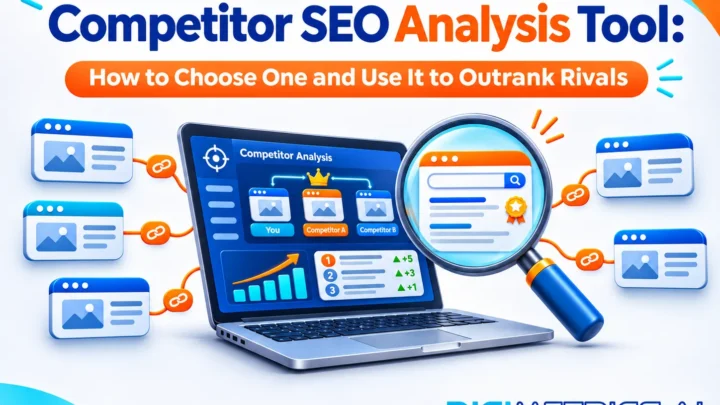
Competitor SEO Analysis Tool: How to Choose One and Use It to Outrank Rivals
Contents hide 1 Key Takeaways 2 How to Choose a Competitor SEO Analysis Tool 3 Introduction: Why a Competitor SEO Analysis Tool Matters in…

To find keywords for SEO, start with 10 or fewer seed keywords drawn from your products and customers. Expand them into candidate terms using research tools, then score each keyword on search intent, SERP winnability, business relevance and volume, in that order. The dominant intent of this query is informational and procedural: the reader wants a repeatable method, not a single tool or a list of keyword ideas.
Ranking terms by monthly search volume and publishing the top ones fails because volume ignores intent. A term with 2.7 million monthly searches may still be a poor target for one page, since its searchers want reviews, prices and repair help at once. Chasing the highest-volume terms can also bring in visitors who never convert, so the traffic you gain may not help the business. Search engines reward a page that matches intent, so a lower-volume term with a clear match often serves your content better.
Score each candidate as a decision, then turn the highest scorers into briefs for your content. Define your audience before scoring, so you know what your business sells and who it serves. You need a Google Search Console account if you have a live website, and at least one keyword research tool. A sound keyword strategy depends on these inputs being in place first.
A keyword list shows what people search for, not what to publish. Volume alone ignores intent and whether your website can win the term. A term with 2.7 million monthly searches may still be a poor target for one page.
A plan turns keyword ideas into content decisions. For each keyword, it makes three decisions: the intent it serves for the target audience, whether current results are beatable, and which page will own it. A sound keyword strategy starts from these decisions, not from the raw list.
The process runs in five stages:
Volume comes last on purpose. It is the most over-trusted signal, and it can drive traffic that never converts. Research into search intent should guide every stage before volume is considered.
This guide suits SEO specialists, content leads and founders who write their own pages. Paid SEO tools speed up some steps but are not required. Before you start, gather:
Allow an hour or two for a small website. Repeat the process each quarter.
Keyword research is the process of finding the search terms people type into engines like Google, then deciding which ones are worth building a page around. It is not keyword stuffing, and it is not a list. A spreadsheet of 2,000 terms is raw material, not a decision. The useful output is a short set of target keywords, each tied to a page, a search intent and a reason to think you can rank. Done well, this research also reveals what content your audience wants and helps you find gaps your competitors have not covered.
Your page either matches the phrasing and intent behind a query, or it does not. Spoken questions are longer than typed ones, so research limited to short head terms misses much of the demand. Targeting the exact words your audience uses helps a page get found and useful, and it is one of the most reliable ways to bring in qualified traffic. Clear, well-structured content built around those words helps the page serve the reader.
| Type | Example | Typical volume | What it usually needs |
|---|---|---|---|
| Head | “iPhone 13” | Very high | A broad hub page covering many intents |
| Long-tail | “best affordable iPhone 13 cases” | Low | A focused page matching one clear intent |
| Seasonal | “Christmas gift ideas 2026” | Spikes at set times | A page published ahead of the peak |
| Local | “plumber near me” | Moderate, location-bound | Location pages and a complete business profile |
| Branded | “MediaOne SEO tools” | Depends on awareness | Your own brand pages and reviews |
Volume measures how many people searched, not how many were ready to buy. Search Engine Journal’s keyword research guide contrasts “iPhone 13”, about 2.7 million monthly searches, with “best affordable iPhone 13 cases”, about 210. The second term typically converts better, though the gap varies by product and market.
Classify every target keyword into one of these types before writing. A commercial query answered with a sales page fails, and a transactional query answered with a long explainer also fails. Matching each query type to the right format is how your content helps the reader get what they came for.
Most keyword research fails when a writer picks a format before checking what the searcher wants. Search intent decides the format, so check it first. A keyword with strong volume can still be the wrong target if searchers want something your page cannot supply. Intent is everything: it matters more than stuffing as many relevant terms into your content as possible, and checking it first is how you help you find the terms worth targeting.
Sort every candidate into one of four intent types:
| Intent | What the searcher wants | Example query |
|---|---|---|
| Informational | To learn or understand something | “how to choose running shoes” |
| Navigational | To reach a specific site or brand | “nike running shoes login” |
| Commercial | To compare options before buying | “best running shoes 2026” |
| Transactional | To buy or act now | “buy nike pegasus 41 size 10” |
A page that matches the dominant intent of the query outperforms one that merely includes the right keyword.
A SERP analysis (a review of the search engine results page for a keyword) shows what Google already rewards. Run it in a private browser window set to a US location so personalized results do not skew what you see.
A keyword with a hard SERP and no clear gap makes a poor brief, however attractive its volume.
A page that answers only the first query sends the reader back to the results. Map the follow-ups using three sources:
Follow-up questions for the primary keyword “how to do keyword research for SEO” include:
What is the first step in keyword research?
Start with seed terms drawn from your products, customers and existing pages, then expand them.
How do I know what a searcher wants?
Run a SERP analysis and identify the dominant intent across the top ten results.
Which tools should I use?
Begin with free sources such as Google Autocomplete, Google Keyword Planner and Google Search Console, then add a paid tool once your list outgrows them.
How do I choose which keywords to target?
Score each candidate on intent fit, SERP winnability and business relevance, using volume last.
For “best running shoes 2026”, follow-ups typically include price range, fit for flat feet, durability and whether last year’s model is still worth buying. Add each one to the brief as a required section.
Seed terms are the broad phrases that describe what you sell and how customers talk about it. Keep the list to ten or fewer, drawn from product names, categories, the language customers use, and the titles and headings of existing pages. A seed only your team would use is a weak candidate.
Expansion turns seeds into candidates. Type a seed into Google Autocomplete, then add a question word such as “how”, “best” or “vs” to surface more. Autocomplete shows no volume, so treat the output as possibilities rather than evidence of demand.
Run US searches from a US location, since suggestions vary by country.
Google Keyword Planner, inside a free Google Ads account, shows monthly search volume ranges and related terms. You do not need a running campaign. Its volume figures are modelled estimates, so treat the ranges as direction rather than fact.
Planner’s suggestions lean commercial and can miss informational questions. Fill those gaps with the “People also ask” box and related searches on the results page.
Pick three to five competitors that rank for your seeds, not only the largest brands. Smaller sites often reveal winnable terms. Many keyword research tools let you run competitor URLs to find the keywords they target.
Your own rankings are often a better starting point. Many websites rank on page two or three for terms they never targeted deliberately. Those keywords are cheap to improve because the page already has relevance and some authority.
Google Search Console is free and shows the real queries already bringing impressions and clicks to your website. Google’s Search Console help documentation explains each report in detail.
Flagged terms are the most useful. Google already tests your content for those searches, and a sharper title or clearer section may win the click. The data is sampled and filtered, so read it as a strong signal rather than a complete count.
Search Console reflects only your own site, so pair it with autocomplete and competitor data for the full picture.
Sorting a keyword list by search volume and writing from the top fails, so each keyword should earn its place on merit. Test each candidate against intent, competition and business value rather than raw demand. This approach deliberately down-weights difficulty scores, since a score that measures backlinks says little about whether your page will satisfy the searcher. Used together, these checks help you find the keywords your site can realistically rank for and convert.
Search volume estimates how often a query was searched in a month, usually in one country. Attribute any figure to the tool that produced it and the date you pulled it. It shows how much demand exists, not whether any of it is yours to win.
Volume misleads in three ways. High-volume queries often have mixed intent: “iPhone 13” could mean a price comparison, a support search or an accessory shopper. Volume figures are modelled estimates, and providers can differ by several multiples. A long-tail query with far fewer searches can carry a higher conversion rate, though this is typical rather than universal. Some high-volume queries also send little traffic in practice, because search features such as answer boxes capture the clicks.
Treat volume as a tiebreaker. It helps decide whether a topic deserves a page, while the target keyword is chosen on intent fit and winnability.
Most tools publish a difficulty score, usually 0 to 100, estimated from the backlink profiles of top-ranking pages. Each tool calculates it differently, so scores are not comparable across platforms. It measures link strength, not content quality or intent match.
The more useful question is the authority gap: how far your website sits from the pages already ranking. Check the results page itself. If the top 10 are forums or thin pages, a moderate score can hide a winnable SERP. If they are established reference sites matching the intent exactly, a low score can hide a crowded field.
Add these metrics as inputs to the Seed-to-Brief Scoring Matrix. For each candidate, record:
Keywords scoring 3 on intent fit and business relevance, and at least 2 on winnability, go to the brief stage regardless of volume. A high-volume term scoring 1 on intent fit usually signals that you need several pages, not one.
Clean raw exports before scoring:
A cleaned list is often a third to half the raw export’s size. A shorter list you can score honestly beats a long one you cannot.
Keyword research is a sequence of decisions. Start with up to ten seed keywords, expand them, then score each candidate on intent fit, SERP winnability, business relevance and volume. Candidates that score well on the first three become content briefs, even at modest volume. Keywords that combine a clear intent with a winnable SERP give your content the best chance to find an audience and rank in search engines.
Next, pick three seed keywords for one product line, score the top twenty candidates, and read the first page of results for the two strongest. Thin or mismatched results are your opening. Keep the scoring sheet as your audit trail, then repeat the process quarterly to help your traffic keep pace with search demand. For expansion tools, see the SEO tools guide.
For a site with fewer than about 50 pages, a first pass is usually completed in a few working days. Start with 10 or fewer seed keywords, expand them, then score the shortlist. Time depends on how many candidates you review and how thoroughly you read the search results.
No. Google Autocomplete, Google Search Console and Google Keyword Planner cover the core workflow for a small site. A paid tool becomes worth the cost when you need competitor data or larger databases. Compare options using the criteria in our guide to choosing a keyword research tool.
Assign one primary target keyword per page. The page will often rank for close variants it naturally answers, provided secondary terms share the same intent.
Check search volume for each keyword after about three months. Run a full pass when you launch a product, enter a new market or see Search Console queries drifting away from your targets.
Yes. AI answers change which pages get clicked, but they do not remove the need to match intent. Local service briefs should include “near me” and spoken-question phrasing alongside typed keywords.

Tom is the CEO of MediaOne, a leading digital marketing agency. He is a business-experienced SEO consultant as well as a Google Gold Search Expert serving the international community. He has consulted for MNCs like Canon, Maybank, Capitaland, SingTel, ST Engineering, WWF, Cambridge University, as well as Government organisations like Enterprise Singapore, Ministry of Law, National Galleries, NTUC, e2i, SingHealth. His articles are published and referenced in CNA, Straits Times, MoneyFM, Financial Times, Yahoo! Finance, Hubspot, Zendesk, CIO Advisor. Under his stewardship, MediaOne has won dozens of prestigious digital marketing awards.
Run a free Digimetrics audit across SEO, AI search, content and technical health, and get a plan you can act on today.
Start free →Contents hide 1 Key Takeaways 2 How to Choose a Competitor SEO Analysis Tool 3 Introduction: Why a Competitor SEO Analysis Tool Matters in…
Multi-location businesses can get a misleading picture from a rank tracker that checks keywords from one central point. Customers in other neighborhoods may see…
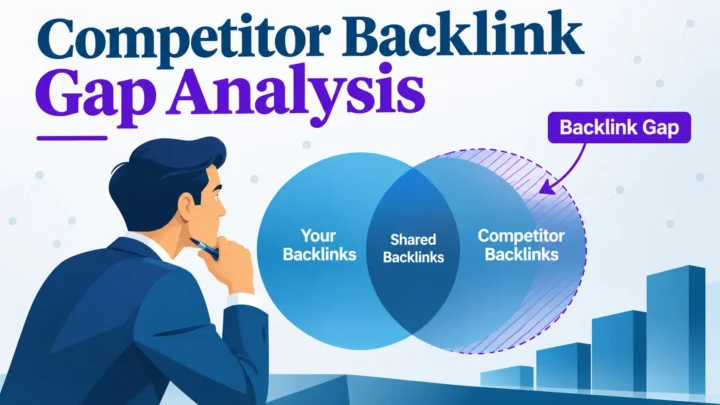
A competitor backlink gap analysis finds domains that link to your competitors but not to you, turning “get more links” into a ranked list…